Nairobi CBD - 00100

You load the washing machine, add detergent, press start, and expect the usual sound of clothes moving around. Instead, the machine just hums. The drum does not turn. Or maybe it washes weakly, like it is struggling, and by the end of the cycle your clothes still look dirty. Sometimes the wash cycle works, but when it reaches spin, everything stops and the clothes come out soaking wet. In many Kenyan homes, from Nairobi and Kiambu to Mombasa, Nakuru, Kisumu, and Eldoret, this is a common washing machine problem. It usually points to the motor or drive system, and that is where Washing Machine Motor and Drive Repair comes in.
The good thing is that a washer with spin or agitation problems is not always finished. Many times, the issue is a worn belt, weak capacitor, tired carbon brushes, damaged pulley, or clutch problem. These parts can often be repaired or replaced without buying a new washing machine. A professional Washing Machine Motor and Drive Repair service helps identify the exact fault, fix it properly, and get your machine moving again without guesswork.
Washing Machine Motor and Drive Repair focuses on the parts that make your washer move. The motor provides the power, but it does not work alone. That power has to pass through belts, pulleys, capacitors, clutches, and sometimes brushes before the drum or agitator can move as it should. If one of these parts fails, the machine may hum, spin slowly, refuse to agitate, or stop during a cycle.
The motor is the main part of the drive system. In some machines, the motor can fail because of worn carbon brushes, burnt windings, damaged bearings, or overheating. If the motor is weak, the washer may start and stop, struggle under load, or fail completely. A technician will test the motor instead of assuming it needs replacement, because sometimes the motor is fine and another cheaper part is the real problem.
The drive belt is another common repair item. It connects the motor to the drum or transmission, depending on the washing machine design. Over time, the belt can stretch, crack, slip, or break. When that happens, the motor may run, but the drum does not move properly. You may hear the motor working, yet the clothes are barely moving inside the machine.
The motor capacitor is especially important in many top-load and twin-tub washing machines used in Kenya. It gives the motor the extra push needed to start. When it fails, the motor may only hum without turning. Some people immediately think the motor is dead, but a faulty capacitor is often cheaper and easier to replace.
Other parts involved include the drive pulley, clutch assembly, motor coupling, and carbon brushes. The pulley helps transfer movement from the motor to the belt. The clutch helps the machine shift between washing and spinning, especially in many top-load models. Carbon brushes, commonly found in some front-load and universal motors, wear down over time and can cause weak or inconsistent motor operation.
One of the clearest signs is a humming sound with no drum movement. You switch on the machine, the motor tries to work, but nothing turns. This can point to a failed capacitor, seized motor, jammed drive system, or wiring issue. Continuing to run the machine in this condition can make the motor overheat.
Another common sign is weak agitation. The machine fills with water, but the clothes barely move. After a full cycle, collars, socks, uniforms, or work clothes may still look dirty. This can happen when the belt is slipping, the pulley is worn, or the agitator drive parts are failing.
A washer that washes but refuses to spin also needs attention. Your clothes may come out heavy and dripping wet, forcing you to wring them by hand or wait many hours for them to dry. This may be caused by a worn clutch, broken belt, weak motor, bad capacitor, or worn carbon brushes depending on the machine type.
Burning smells are another warning sign. A burning rubber smell may mean the belt is slipping against the pulley. A hot electrical smell may point to a motor that is overheating. Either way, you should stop using the machine and call a technician before the damage spreads.
Grinding sounds, violent shaking during spin, or sudden stopping mid-cycle can also be linked to motor and drive issues. Sometimes the problem is not the motor itself, but a seized bearing, jammed drum, or damaged transmission that is forcing the motor to work harder than it should.
Motor and drive repairs need proper diagnosis. It is easy to blame the motor because it is the part most people know, but the motor is not always the cause. A machine that hums may only need a capacitor. A washer that does not spin may need a belt or clutch. A weak wash cycle may be caused by a slipping pulley or worn agitator parts. Replacing the wrong part wastes money and leaves the problem unresolved.
A professional washing machine repair technician uses testing tools like a multimeter to check capacitors, motor windings, switches, and power supply. They also inspect belts, pulleys, clutch parts, and wiring physically. This helps them separate a simple repair from a serious motor failure.
Safety also matters. Washing machines combine water, electricity, and fast-moving parts. Capacitors can hold charge even after the machine is unplugged. Motors and wiring can be dangerous if handled carelessly. A trained technician knows how to discharge a capacitor, disconnect wiring safely, and test the machine without exposing your home to shock risks.
Different washing machines also use different systems. A twin-tub machine in a family home in Rongai may not have the same drive setup as a front-loader in Kilimani or a top-loader in Kiambu. Brands like Samsung, LG, Hisense, Ramtons, Bosch, Whirlpool, and Mika may also use different motors, belts, capacitors, and control designs. A professional understands these differences and can recommend the right part.
Professional repair also protects the rest of the machine. If a belt is fitted too tightly, it can strain motor bearings. If it is too loose, it will slip and fail again. If a capacitor with the wrong rating is installed, the motor may run poorly or burn out. These small details are the difference between a repair that lasts and one that brings back the same problem after two weeks.
A failed motor capacitor is one of the most common washing machine faults, especially in twin-tub and many top-load machines. The motor hums, but it does not have enough starting force to turn. A technician will test the capacitor and replace it with the correct microfarad rating. This is often a simple and affordable Washing Machine Motor and Drive Repair compared to replacing the full motor.
Worn carbon brushes are common in some front-load and universal motor machines. As the brushes wear down, the motor may stop during a cycle, spark, lose power, or fail to spin properly. A technician will remove the motor, check the brush length, replace both brushes together, and inspect the commutator for wear or dirt.
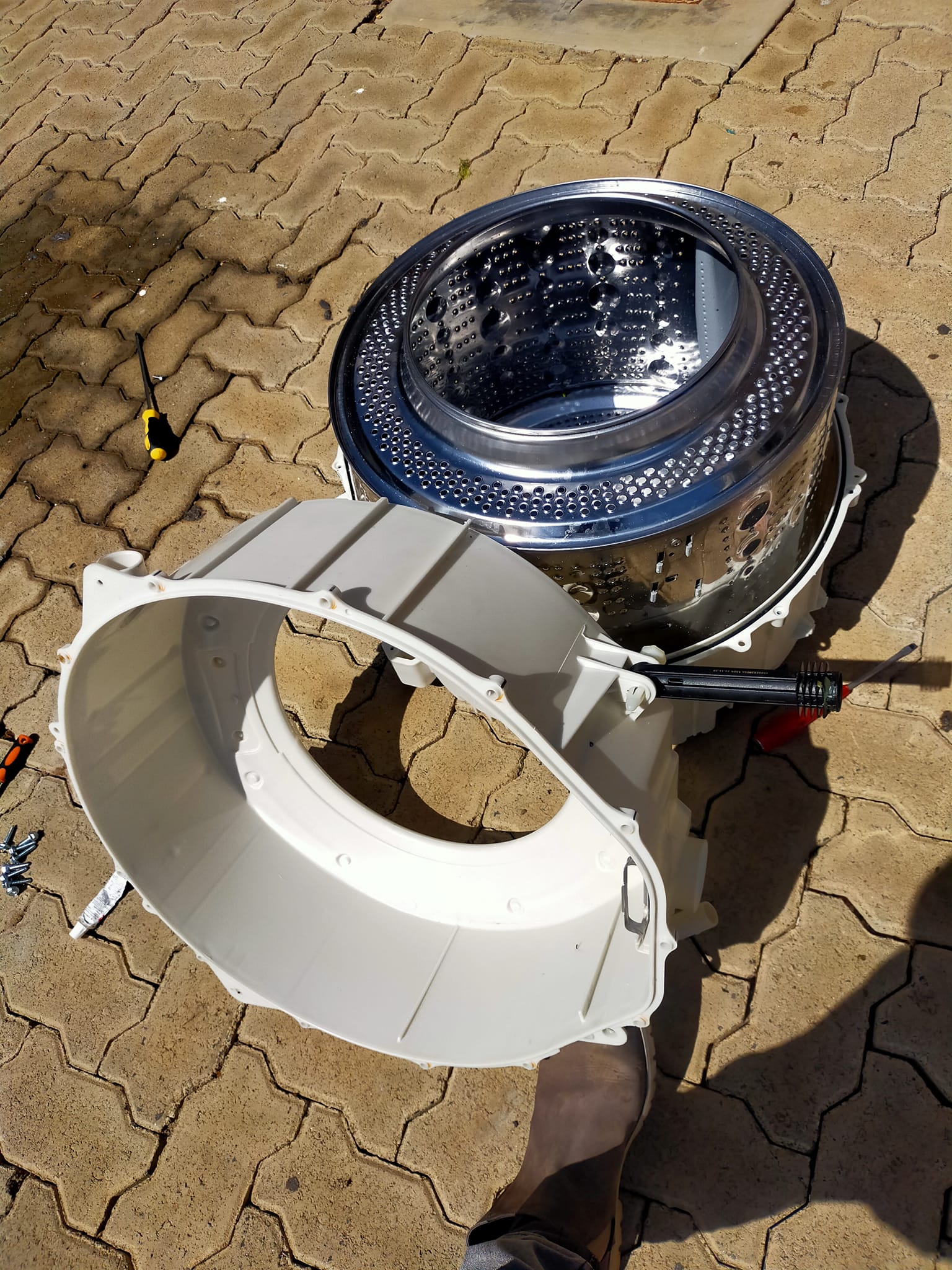
Broken or slipping belts can stop the drum from turning even when the motor is running. A technician will remove the back or bottom panel, check the belt condition, inspect the pulley alignment, and fit a replacement belt with the right tension. They will also check why the belt failed, because a jammed drum or worn pulley can damage a new belt quickly.
A worn clutch assembly can cause slow spinning or no spinning in many top-load machines. The washer may agitate during wash but struggle when it reaches spin. A professional will inspect the clutch lining, brake mechanism, and transmission engagement. If the clutch is worn, they replace the assembly and test the spin cycle properly.
Drive pulley damage can also affect performance. A cracked, loose, or worn pulley can make the belt slip or create grinding noises. A technician will remove the damaged pulley, check the motor shaft or transmission side, fit the correct replacement, and make sure the belt runs straight.
Seized motor bearings or a stuck motor are more serious. The motor may make a rough noise, fail to turn, or overheat quickly. A technician will turn the motor shaft by hand, test the windings, and decide whether bearing repair or full motor replacement makes more sense based on cost and part availability.
When your washer stops spinning, it is tempting to call the cheapest person available. But motor and drive problems are easy to misdiagnose. An unverified person may tell you the motor is dead when the real issue is a capacitor costing much less. Or they may change the belt without checking the clutch, pulley, or drum movement, so the new belt fails again.
Poor installation can create new problems. A belt that is too tight can damage the motor. A belt that is too loose will slip. A wrong capacitor rating can make the motor overheat. Incorrect wiring can short the control board or cause the motor to behave badly. These mistakes can turn an affordable Washing Machine Motor and Drive Repair into a costly full repair.
There is also the risk of damage while opening the machine. A washing machine has panels, hoses, clips, wiring, and sometimes a door boot on front-load models. Someone without care or experience may break a hose connector, tear the rubber seal, or leave a wire loose. Then you have a leak or electrical issue on top of the original motor problem.
Deposit scams are also common. A person may claim they need money to buy a motor, belt, or capacitor, then disappear or delay for days. Others may install used or poor-quality parts that fail quickly. When you call them back, they may not answer or may ask for more money.
Good repair should include testing after the job. The technician should run the washer, confirm the drum agitates, check spin speed, listen for abnormal noise, and inspect for vibration. Someone rushing through the job may close the machine and leave before confirming whether the repair is actually complete.
Finding a trusted appliance repair technician in Kenya can be frustrating, especially when your laundry is already piling up. The Real Plug helps connect you with vetted service providers who handle washing machine repair, including motor and drive problems. Instead of relying on random posters, social media comments, or referrals you are not sure about, you can search for Washing Machine Motor and Drive Repair near me and find local professionals in Kenya who are ready to help.
Whether you are in Nairobi, Thika, Kiambu, Rongai, Machakos, Nakuru, Kisumu, Eldoret, Mombasa, Kasarani, Kilimani, or Pipeline, The Real Plug makes it easier to connect with someone who understands washer motors, belts, capacitors, carbon brushes, pulleys, clutches, and drive systems. You can explain what the machine is doing, discuss the likely issue, agree on pricing, and arrange a visit.
The value of using The Real Plug is accountability. Professionals listed on the platform know that customers care about fair pricing, proper diagnosis, and repairs that last. They also know that their reputation matters, which encourages them to show up, communicate clearly, use quality parts, and test the machine before leaving.
For technicians who offer professional Washing Machine Motor and Drive Repair, The Real Plug is also a practical way to reach serious customers. Homeowners, landlords, small laundry businesses, salons, clinics, and property managers are often looking for reliable washing machine repair services. If you can diagnose motors, replace capacitors, fit belts, change carbon brushes, and repair drive systems, the platform helps customers find you.
A washing machine that hums, spins slowly, agitates weakly, or smells like burning should not be pushed to continue working. The more you force it, the higher the chance of damaging the motor, belt, pulley, clutch, or control system. Early diagnosis can save you money and prevent a simple repair from becoming a major breakdown.
Professional Washing Machine Motor and Drive Repair helps restore proper drum movement, strong agitation, and reliable spin performance. Whether the issue is a capacitor, belt, motor, carbon brushes, pulley, or clutch assembly, a skilled technician can check the machine properly and recommend the right fix.
Visit The Real Plug today to hire a trusted washing machine repair professional who can handle Washing Machine Motor and Drive Repair in your area.
If you are an experienced appliance repair technician, register on The Real Plug and connect with customers looking for reliable washing machine repair services across Kenya.