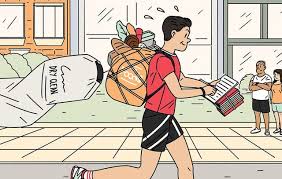


Every parent knows that school calls rarely come at a convenient time. It is usually when you are in the middle of a meeting, serving customers, driving through traffic, or finally trying to finish something important. Then the phone rings. The teacher says your child forgot a project. The school nurse says your son has a fever. The class teacher needs a signed consent form before lunch.
For a few seconds, your mind starts racing. Can you leave work? Who is near the house? Is there someone you trust enough to help? In Nairobi, Mombasa, Kisumu, Nakuru, Eldoret, and many other towns, more parents are answering that last question with errand runners.
Not because they do not care. Quite the opposite. They are finding practical ways to respond quickly when school life throws those small emergencies that never seem small in the moment.
School Emergencies Are More Common Than People Admit
If you have a child in school, especially under the CBC system, you already know how quickly “small things” pile up. Today it is manila paper. Tomorrow it is a labelled plastic bottle, a traditional item for cultural day, a missing P.E. kit, or a project that was somehow completed but left on the dining table.
Then there are health-related calls. A child falls during games, complains of stomach pain, gets a headache, or needs to be picked up because the school is not comfortable keeping them in class. These calls can be stressful because they involve both urgency and trust.
Payments and paperwork also create last-minute pressure. A school trip fee, a consent form, a medical card, a birth certificate copy, or an exam registration document can suddenly become urgent. Sometimes the notice was sent early, yes, but between work, homework, traffic, and home routines, things slip through.
That does not mean parents are careless. It means life is busy, and parenting in Kenya today comes with many moving parts.
What Errand Runners Do for Parents
School errands are not the same as ordinary deliveries. A runner handling school tasks needs to understand instructions, security procedures, and the sensitivity involved. Schools will not release a child or accept certain items casually, and rightly so.
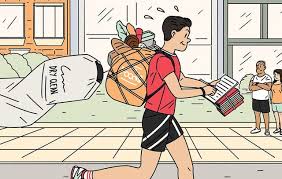
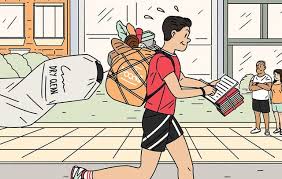
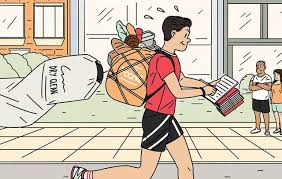
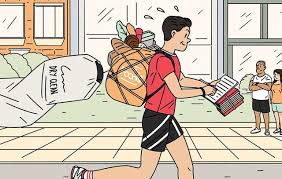
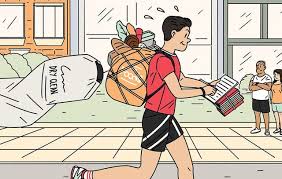
For forgotten items, the process is usually simple. The parent sends the runner to collect the lunch box, textbook, project, sports kit, sweater, or school shoes from home. The runner delivers it to the school reception or gate, confirms who received it, and sends an update to the parent.
For paperwork, a runner may deliver signed forms, printed payment confirmations, medical documents, or copies of IDs. These are small tasks, but they can save a parent from leaving work for two hours.
Medical pickups are more sensitive. A parent should only use someone trusted, known, and approved by the school. Some families register a runner’s name and ID with the school at the start of the term, especially if the parent works far from the school. That way, if an emergency happens, the school already knows who is allowed to help.
Why Parents Are Turning to Runners
The biggest reason is time. A parent working in Westlands may have a child schooling in Syokimau. A business owner in Kisii may be alone at the shop when a school calls. A nurse on shift in Mombasa cannot simply walk away because a child forgot swimming gear.
Traffic makes things worse. In Nairobi especially, what looks like a 30-minute errand can become a two-hour interruption. By the time a parent leaves work, gets home, collects the item, reaches school, and returns, the day may be badly disrupted.
For small business owners, the cost is even clearer. Closing a shop to deliver a forgotten item means lost customers. A salon owner, pharmacist, boutique seller, or cyber café operator may lose more money stepping out than they would spend paying a reliable runner.
Errand runners give parents a backup plan. They help keep the day moving without ignoring the child’s needs.
Trust Is the Most Important Part
When children are involved, trust matters more than speed. Parents are not just looking for someone with a motorbike. They need someone calm, presentable, respectful, and careful with instructions.
A good school errand runner understands that schools have rules. They do not argue with guards, walk into classrooms, or call the child directly unless told to. They go through reception, confirm the right contact person, and give proper updates.
Communication is also important. A parent should not have to keep calling to ask, “Umefika?” A reliable runner sends clear updates: collected from home, arrived at school, handed to the teacher, received by the office. Where appropriate, they can send a photo of the signed note or delivery confirmation.
Because of this trust issue, many parents prefer vetted service providers. Platforms like The Real Plug can help parents find vetted professionals, including errand runners who understand family and school-related tasks. That extra layer of screening can make a big difference when the errand involves a child, documents, or medication.
How Parents Build a Reliable System
Most parents do not start by handing over sensitive responsibilities. They test slowly. The first errand may be delivering a book, a lunch box, or a signed form. If the runner communicates well, arrives on time, and follows instructions, trust begins to grow.
Referrals also help. School WhatsApp groups are often full of parents asking for contacts of reliable runners. If several parents in the same school already use one person, that gives some confidence.
It also helps to give the school clear instructions in advance. Parents can inform the class teacher or office that a specific person may deliver items when needed. For more sensitive situations, such as picking up a sick child, the school should have the person’s full name, ID number, and written permission from the parent.
The goal is to avoid confusion at the gate when everyone is already stressed.
What It Usually Costs
The cost depends on distance, urgency, traffic, and whether the runner needs to wait or buy something. A short errand within the same estate or nearby area may cost a few hundred shillings. Cross-town school errands, especially in Nairobi, cost more because of time and traffic.
If the runner needs to buy items such as stationery, medicine, snacks, books, or school supplies, parents should agree on the budget first. M-Pesa is usually safer than sending cash, and receipts or photos help keep everything clear.
Some families with regular needs make monthly arrangements with a trusted runner. This can work well for parents with several children, busy schedules, or boarding school errands that come up often during the term.
Boarding School Errands
Boarding school parents often rely on errand runners even more. A child may need revision books, toiletries, extra uniform, medication, pocket money confirmation, or something delivered during visiting day.
If the parent is in another town, a runner can buy the items, pack them, and coordinate with the school office, matron, or transport service. Some runners handle several schools on the same route, especially around Nairobi, Kiambu, Limuru, Thika, Nakuru, and other school-heavy areas.
For parents in the diaspora, this kind of help can be especially useful. A trusted runner can bridge the distance between the parent, the supplier, and the school.
Does Using a Runner Make Children Less Responsible?
Some parents worry that rescuing children too quickly may teach them carelessness. It is a fair concern. Children should learn to pack their bags, check diaries, and take responsibility for school requirements.
But parenting also needs balance. Letting a young child miss lunch, skip a trip, or lose marks for a project may not always be the right lesson, especially when the issue can be solved safely.
Using an errand runner does not mean removing responsibility. A parent can still talk to the child later, create a checklist, or set consequences at home. The runner simply prevents a manageable mistake from becoming a bigger problem.
Final Thoughts
Errand runners have quietly become part of how busy Kenyan parents manage school life. They help with forgotten items, urgent documents, school payments, medical pickups, and boarding school needs.
The important thing is to choose carefully. Work with someone trustworthy, communicate clearly, start small, and make sure the school knows the process. When handled well, school errand support reduces panic without replacing parental responsibility.
In the end, parents are not trying to outsource care. They are trying to keep life steady when work, traffic, school demands, and family needs all collide on the same morning.