Nairobi CBD - 00100

In a gated estate, a sewage problem does not stay hidden for long. One overflowing inspection chamber near the main gate can affect children going to play, residents driving out for work, visitors coming in, and the estate manager’s phone before breakfast is over. In places like Kamakis, Syokimau, Ruiru, Kitengela, Athi River, Kiambu, and parts of Mombasa, many residential estates depend on shared septic tanks, biodigesters, soak pits, or private sewer systems that serve dozens of homes at once. That is why Exhauster Services for Gated Communities and Residential Estates are not just routine waste removal. They are part of estate management, resident comfort, public health, and long-term property value.
Gated communities and residential estates operate differently from single homes or small rental blocks. A single household septic tank serves one family, but an estate system may handle waste from 30, 80, 150, or even more homes depending on the design. Some estates have several tanks serving different courts or phases, while others rely on shared biodigesters, sewer chambers, treatment units, or soak-away systems. When such a system is not emptied, inspected, or maintained on time, the problem can spread across common roads, walkways, gardens, parking areas, playgrounds, and neighbouring homes.
This is why planned Exhauster Services for Gated Communities and Residential Estates are so important. Residents pay service charge and expect water, security, lighting, drainage, garbage collection, and sanitation systems to work without drama. When sewage overflows, the issue quickly becomes emotional because every resident feels affected. People start asking why maintenance was delayed, whether funds were used properly, and why the management committee did not act earlier. What began as a technical sanitation issue can easily become a governance problem in the residents’ WhatsApp group or at the next estate meeting.
Delays can also affect property value and the estate’s reputation. A homebuyer visiting an estate in Tatu City, Athi River, Kikuyu, Vipingo, Runda, or Nyali will notice bad smells, wet patches, overflowing chambers, or stained roads. Even if the houses are well built, poor sanitation makes the estate feel badly managed. For developers still selling units, estate managers collecting service charge, or homeowners hoping to rent out their houses, reliable waste management is part of protecting trust. Regular exhauster work may not be exciting, but it keeps the estate functional and prevents embarrassing emergencies.
A serious provider does not treat a gated estate like a quick one-house job. The work usually starts with understanding the estate layout. The provider needs to know where the septic tanks, biodigesters, inspection chambers, and access points are located. In some estates, the tanks may sit near the perimeter wall, while in others they are behind courts, under landscaped areas, near common facilities, or along internal roads. The provider should check whether trucks can move inside the estate without damaging cabro paving, manhole covers, lawns, kerbs, barriers, or drainage channels.
Access planning is a big part of the service. Some estates have narrow internal roads, strict gate controls, low-hanging trees, speed bumps, and parking arrangements that make it difficult for large exhauster trucks to reach the tank directly. A professional team may need long hoses, smaller support trucks, or scheduled access through specific gates. They may also coordinate with security, caretakers, estate managers, and residents so the work does not block everyone during school runs, evening traffic, or weekend family activities.
The provider then inspects the waste system before emptying. This may involve opening the relevant manholes, checking sludge levels, looking for overflow signs, and observing whether waste is flowing properly from different sections of the estate. In larger gated communities, one phase may be functioning well while another has a blocked line or a failing soak pit. A good team will not simply pump the first tank they see and leave. They should try to understand whether the issue is a full tank, a blocked chamber, an overloaded biodigester, stormwater entering the system, or a drainage line that needs separate attention.
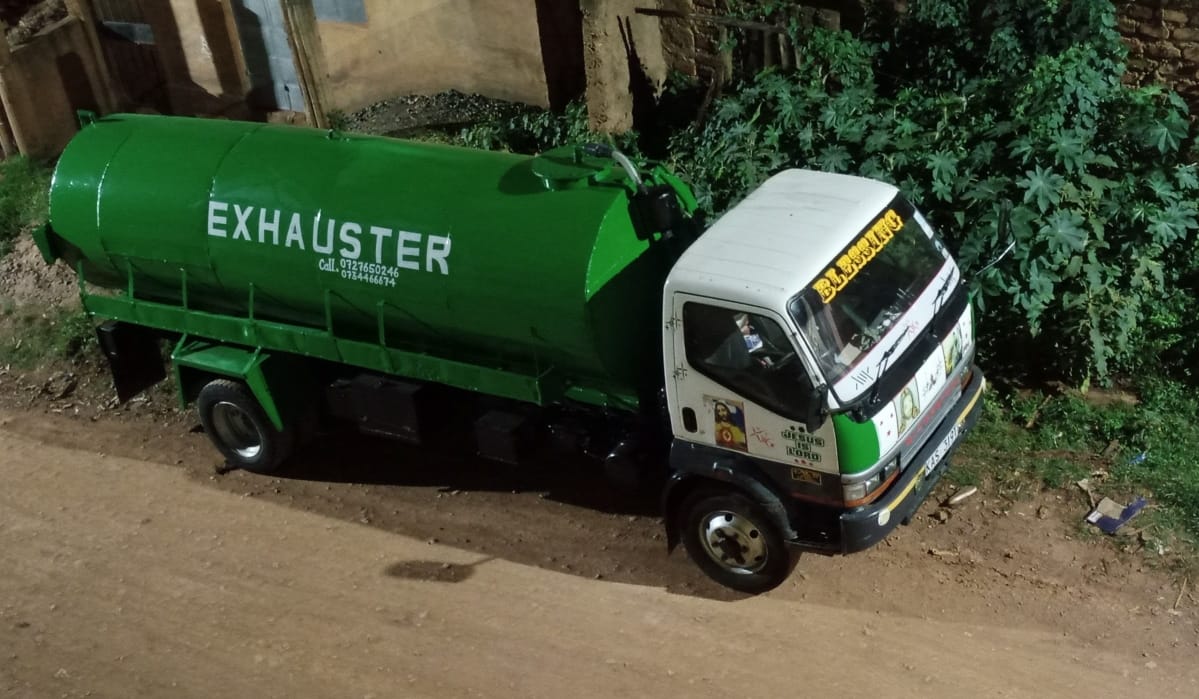
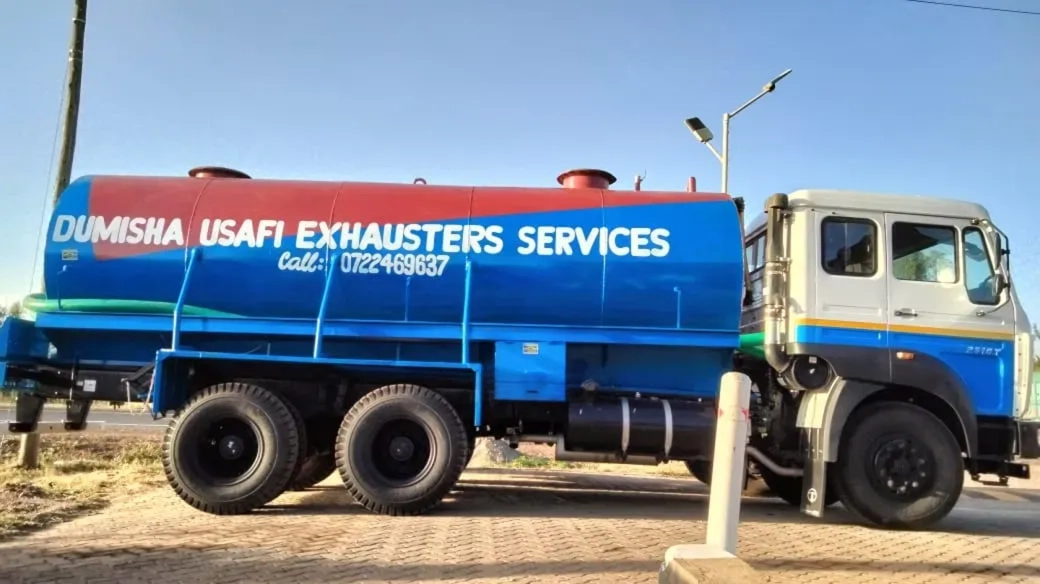
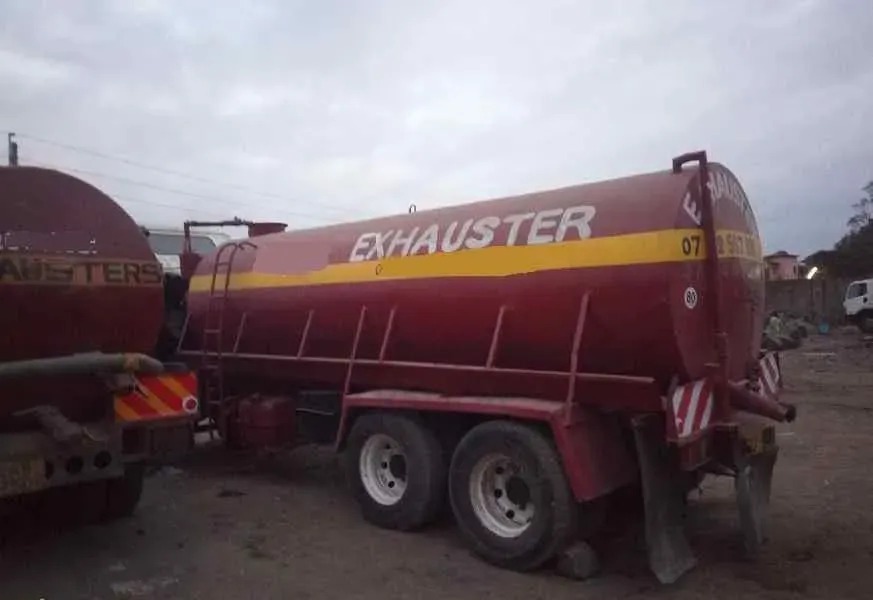
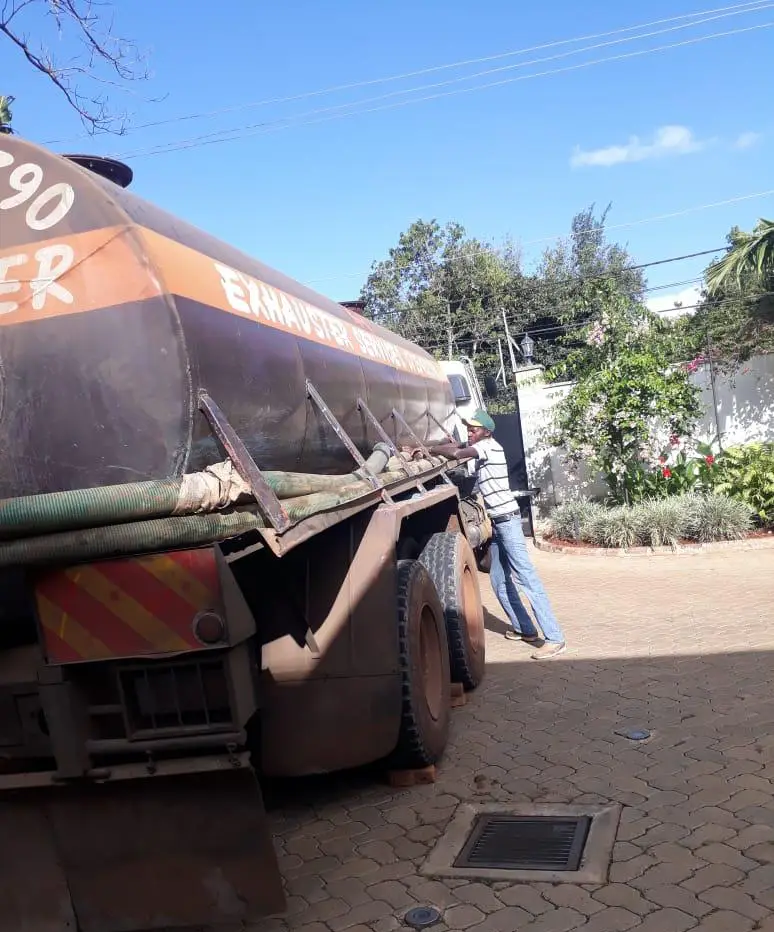
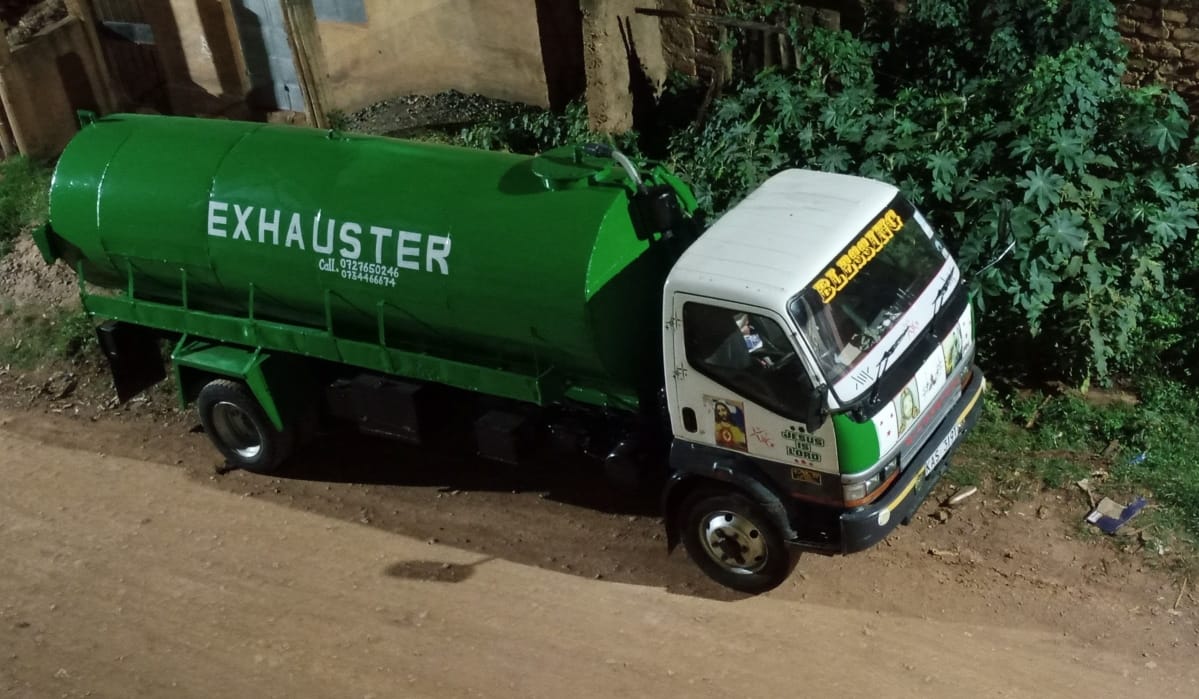
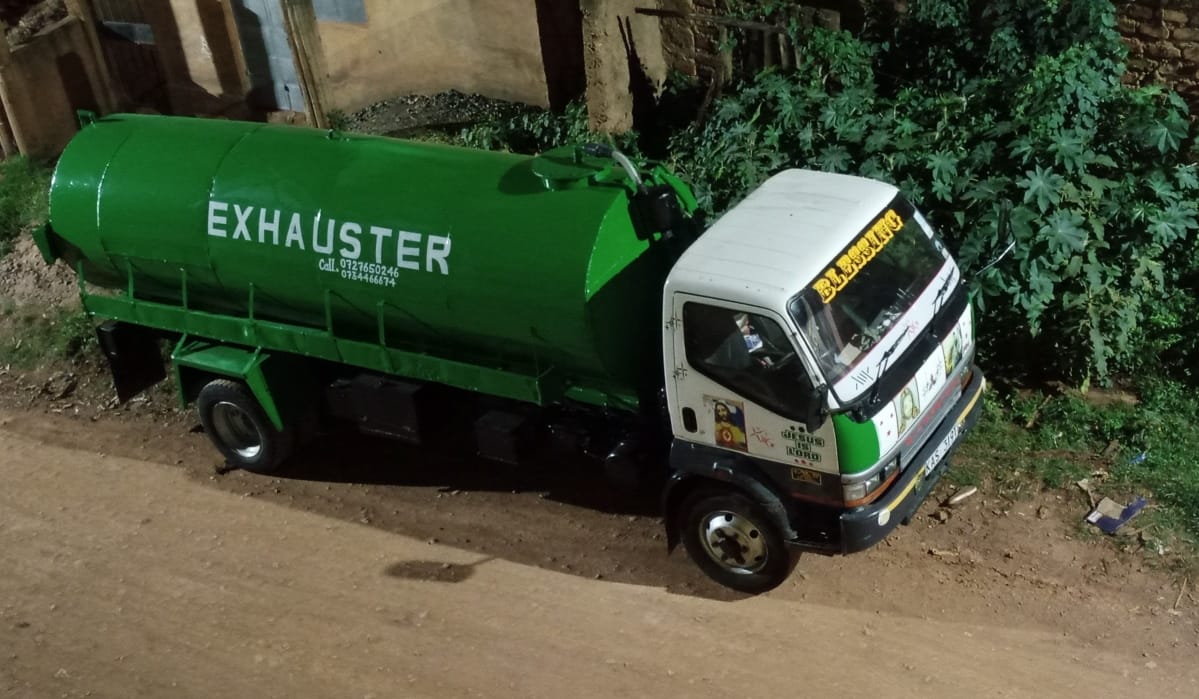
The actual emptying is done using vacuum exhauster trucks that remove liquid waste, sludge, and semi-solid material from the tanks or chambers. Estates may require high-capacity trucks, several trips, or coordinated work over several hours depending on the number of homes served and how long the system has gone without servicing. After pumping, a responsible provider should check whether flow has improved and whether there are signs of deeper problems. If sewage keeps backing up even after emptying, the estate may need drain unblocking, soak pit rehabilitation, repairs, or a review of the original sanitation design.
Estate managers, management committees, developers, and residents’ associations should expect more than a truck and a hose. A reliable provider should communicate clearly before the job begins. They should ask about the number of homes, the location of tanks, recent overflow history, access conditions, expected volume, and whether the work is routine or urgent. These questions help them prepare the right equipment, crew size, truck capacity, and schedule. A provider who gives a quick quote without asking anything may later revise the price once they arrive and realise the estate system is larger or harder to access.
Pricing should be transparent enough for a committee or estate office to explain to residents. Costs may depend on truck capacity, number of trips, distance to the estate, disposal charges, urgency, access complexity, and whether cleaning, disinfection, or unblocking is required. Affordable Exhauster Services for Gated Communities and Residential Estates should not mean choosing the cheapest unknown operator. It should mean getting fair pricing, clear scope, proper waste handling, and a provider who can account for the work done.
A professional provider should also respect the estate environment. Gated communities often invest heavily in landscaping, paved roads, lighting, parking spaces, security systems, and common areas. A careless crew can leave oil marks, sewage spills, broken covers, damaged plants, or complaints from residents who feel the work was handled roughly. The team should use suitable hoses, protective gear, tools for opening manholes, and safe handling methods. They should also clean up after themselves and ensure chambers are closed properly before leaving the estate.
For larger estates, reports and basic documentation can be useful. The estate manager may need to inform a committee how much waste was removed, which tanks were serviced, what problems were noticed, and when the next service should be scheduled. Where disposal records are needed, especially for bigger estates, mixed-use communities, or properties under closer public health scrutiny, the provider should be able to explain how waste is transported and disposed of. This protects the estate from questions later and supports better planning.
Some estates wait until a bad smell starts spreading before calling whoever the caretaker knows. That kind of last-minute approach may seem convenient, but shared sanitation systems need more planning. When one provider fails to handle the job properly, many residents are affected. A single spill can contaminate roads, children’s play areas, gardens, and walkways. A half-done emptying job can lead to another overflow within weeks, forcing the estate to pay again and defend the expense to unhappy residents.
Professional Exhauster Services for Gated Communities and Residential Estates help reduce repeat problems because the provider is more likely to look at the whole system, not just the immediate overflow. A qualified team can identify when the tank is full, when the sludge level is too high, when a line from one court is blocked, or when the soak pit is failing. This matters because simply emptying the tank may not solve the issue if wastewater cannot drain away properly. Without proper assessment, an estate may keep paying for emergency visits while the real problem remains underground.
Professional handling also reduces health and safety risks. Exposed sewage can carry harmful germs and contaminate surfaces where residents walk, children play, or pets move around. In a gated estate, shared spaces must be protected because many people use them daily. A trained provider is better equipped to remove waste safely, limit spills, disinfect affected areas where necessary, and advise on follow-up repairs. Random or unprepared operators may remove visible waste but leave contamination, smell, or damaged infrastructure behind.
There is also the issue of accountability. Estate committees and managers are answerable to many homeowners, so they need providers who can be contacted, traced, and questioned if something goes wrong. A casual number from a poster or forwarded WhatsApp message may disappear after payment, especially if the job was poorly done. With shared systems, the cost of poor accountability is high because the impact is public and affects resident trust.
Using unverified providers for estate-level exhauster work can create serious problems. One major risk is incomplete emptying. Some operators may remove only the liquid layer because it is faster, leaving heavy sludge at the bottom of the tank. The estate may seem fine for a short time, then the same chamber overflows again. Residents will not blame the operator they never met. They will blame the estate office, committee, developer, or property manager who approved the service.
Illegal dumping is another major concern. Waste from a gated community can be a large volume, and some unlicensed providers may try to avoid proper disposal costs by dumping in open fields, rivers, quarries, storm drains, or isolated roadsides. This is unsafe for surrounding communities and the environment. It can also create reputational and legal problems for the estate if complaints are raised or the waste is traced back. Estate managers should ask providers how waste will be handled and, where necessary, verify disposal requirements with the relevant authority or county office.
Poor handling can also damage shared infrastructure. Heavy trucks can crack weak paving, break drainage covers, damage kerbs, or get stuck on poorly prepared roads. Rough hose handling can damage plants, wall edges, pipe connections, or manhole covers. Excessive suction or careless pumping can worsen problems in older concrete tanks or poorly built systems. Repairs for such damage are usually paid from service charge funds, which can cause disputes among residents who feel the damage was avoidable.
Health risks are also higher in estates because common spaces are shared by many families. A sewage spill near a playground, walkway, clubhouse, parking zone, or security gate can expose residents, domestic workers, guards, visitors, children, and pets to contamination. If the provider does not clean and disinfect affected surfaces properly, the smell may remain and residents may continue complaining even after the truck has left. In serious cases, the estate may need extra cleaning, temporary closure of affected areas, or follow-up work from drainage and plumbing specialists.
Scams and hidden charges also happen in urgent sanitation work. A provider may ask for a deposit to send a truck and then fail to arrive. Others may arrive with a smaller truck than required, start the job, and then demand more money halfway. Some may quote cheaply to win the job but cut corners on disposal, cleaning, or sludge removal. For an estate, such mistakes affect budgets, resident trust, and committee credibility. This is why hiring trusted providers matters.
Finding a reliable provider for a shared estate system should not depend only on a caretaker’s contact list, a random roadside poster, or the cheapest name in a WhatsApp group. The Real Plug gives estate managers, homeowners, landlords, residents’ associations, developers, and property managers a more organised way to find vetted service providers in Kenya. The platform connects users with local professionals, independent service providers, and businesses across different service categories.
For Exhauster Services for Gated Communities and Residential Estates, The Real Plug can help you review available providers, compare options, and contact businesses that handle sanitation work in your area. Whether the estate is in Nairobi, Kiambu, Machakos, Mombasa, Nakuru, Eldoret, Kisumu, Thika, Kitengela, or Syokimau, using a platform helps reduce the guesswork of calling unknown numbers during a crisis. You can ask about truck capacity, service areas, availability, disposal practices, access needs, and whether the provider can handle planned or urgent estate-level work.
This kind of visibility helps reduce risks such as deposit scams, poor communication, illegal dumping, incomplete emptying, and providers who cannot handle large shared systems. It does not remove the need for due diligence, but it gives estate managers a better starting point. For communities where decisions must be explained to residents or committee members, using a more traceable platform can make hiring feel more professional and accountable.
For sanitation companies, exhauster truck operators, and businesses offering Exhauster Services for Gated Communities and Residential Estates, trust and visibility are important. Estate clients are often looking for providers who can handle large volumes, coordinate with management, communicate clearly, respect common areas, and offer practical advice after the job. If your business is difficult to find online, estate managers may never know you can handle this level of work.
Creating a profile on The Real Plug helps professional providers become easier to discover by people actively searching for estate sanitation solutions. It can help you reach developers, property managers, residents’ associations, facility managers, landlords, and homeowners across Kenya. A professional listing also helps you compete more confidently against random operators because clients can find you through a platform focused on vetted local professionals and businesses.
Estate clients can also lead to repeat work. Many gated communities need routine emptying, scheduled maintenance, emergency response, inspections, and follow-up services throughout the year. Being visible on The Real Plug can help serious providers attract better enquiries from clients who value reliability, capacity, and accountability. In a market where one good estate contract can lead to referrals across neighbouring developments, a clear online presence is a practical business advantage.
Clients looking for reliable Exhauster Services for Gated Communities and Residential Estates can review and hire professionals or businesses offering Exhauster Services for Gated Communities and Residential Estates through The Real Plug for safer and more confident hiring.
Professionals and businesses offering Exhauster Services for Gated Communities and Residential Estates should create a profile and get listed on The Real Plug for stronger visibility and more client opportunities across Kenya.