

A washing machine is supposed to make clothes smell fresh. So when you open the door and get hit by a sour, musty smell, it feels wrong.
You pull out shirts from your washer in Westlands, expecting them to smell clean, but they come out with that damp odor. Or you open the machine in your Mombasa home before starting a cycle, and the smell is already there. In some cases, towels smell fine when wet, then turn sour after drying. That is usually the machine, not the detergent.
In Kenya, washing machines get dirty faster than many people realize. Dust, hard water, heat, humidity, detergent residue, and frequent washing all create the perfect environment for mold and bacteria. The strange part is that the appliance cleaning your clothes may be one of the dirtiest machines in the house.
The good news is that a smelly washer can usually be fixed. Sometimes basic cleaning is enough. Other times, the dirt is hidden behind the drum and needs professional cleaning.
Where the Bad Smell Comes From
A washing machine is warm, dark, and damp after every cycle. That alone makes it a good place for mold and bacteria to grow.
Every wash leaves something behind. Detergent residue. Fabric softener. Body oils. Lint. Dirt from clothes. Small bits of tissue or fabric. Over time, these collect in hidden areas of the machine.
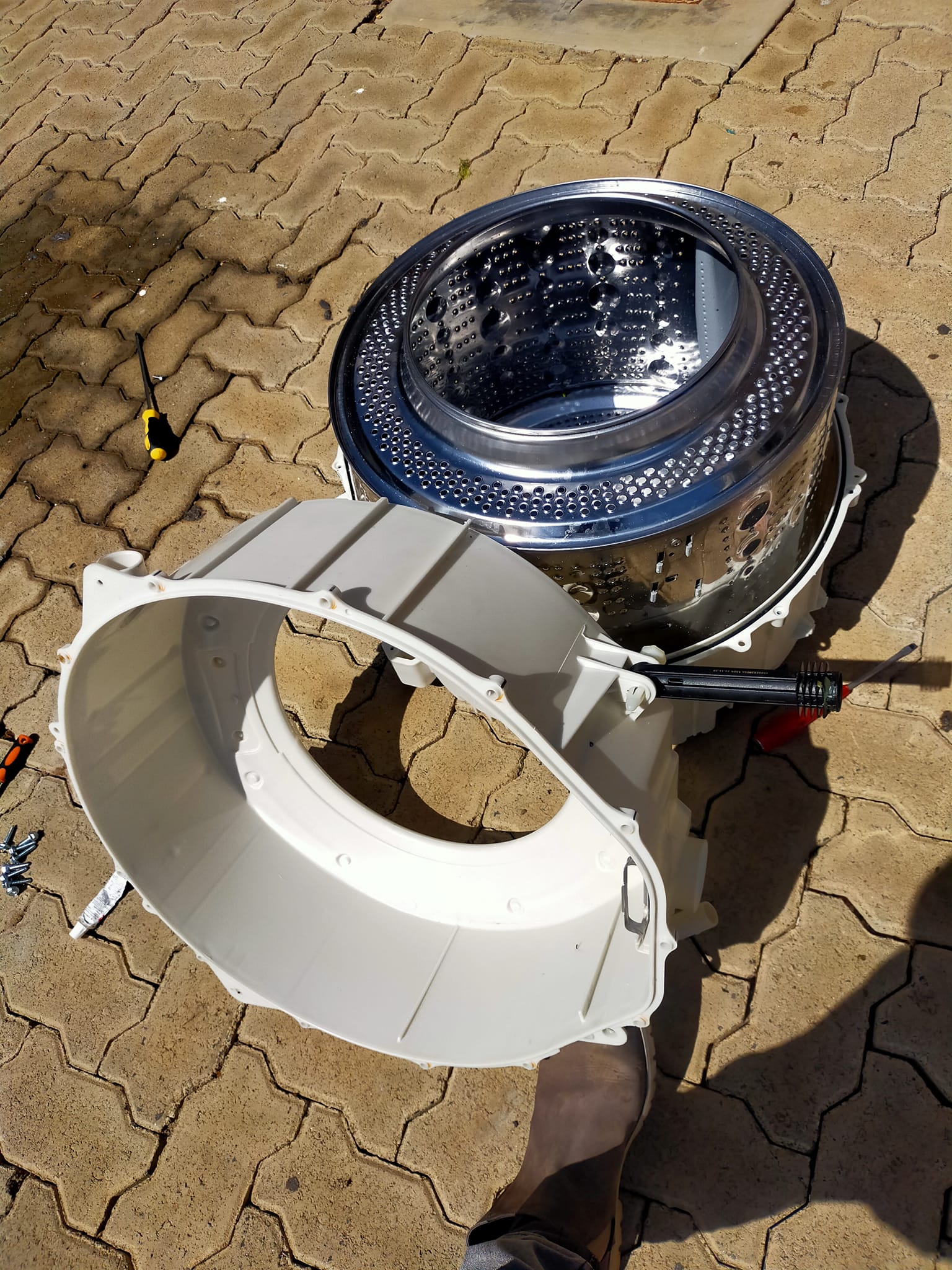
In front loaders, buildup often hides in the rubber door seal, detergent drawer, drain filter, sump hose, and behind the drum. In top loaders, it can collect under the agitator, around the inner tub, inside filters, and in the drain system.
Hard water makes the problem worse. In places like Kiambu, Machakos, Naivasha, Kitengela, and parts of Nairobi, minerals in the water mix with soap and create a sticky film. That film traps dirt and bacteria. Once it builds up, every wash can release a bad smell back into the drum.
Using too much detergent also adds to the problem. More soap does not mean cleaner clothes. In fact, too much detergent often fails to rinse out properly, especially in low-water front loaders. It leaves residue that feeds mold and creates that sour smell.
Why Front Loaders Smell More Often
Front load washing machines are efficient, but they are also more likely to develop smells if not maintained properly.
The rubber door seal is a common hiding place. Water, lint, hair, and detergent residue collect in the folds. If the door is closed immediately after washing, moisture stays trapped and mold starts growing.
This is why many front loaders smell musty after a while.
In humid areas like Mombasa, Diani, Kisumu, and parts of the coast, mold grows even faster. In Nairobi apartments where laundry areas have poor ventilation, the same thing can happen.
Leaving the door slightly open after washing helps the drum and seal dry. It is a small habit, but it prevents many odor problems.
Top loaders can smell too, but the buildup is usually hidden under the agitator, around the tub, or in the filter system. Because the dirt is harder to see, people may not notice the problem until clothes start smelling bad.
Different Smells Can Mean Different Problems
Not every washing machine smell has the same cause.
A musty or damp smell usually means mold or mildew. This often comes from the door seal, detergent drawer, drain filter, or hidden buildup behind the drum. You may see black spots on the rubber seal or smell it more strongly when the door has been closed for a while.
A sewage or rotten egg smell may point to the drain system. The drain hose may be pushed too far into the standpipe, allowing dirty water or gases to come back into the machine. The standpipe itself may also be blocked. In some rentals, poor plumbing can make washer smells worse, especially when the machine drains into shared or badly fitted pipes.
A burning smell is different. Stop the machine immediately. That may point to a motor, belt, board, or electrical issue. It is not a cleaning problem and should be checked by a technician.
A sharp chemical smell may come from detergent buildup, wrong cleaning products, or residue heating on internal parts. Avoid mixing cleaning chemicals, especially bleach with other products.
Smell gives clues. Pay attention to when it appears: before washing, during draining, after a hot cycle, or only when clothes come out.
What You Can Clean Yourself
There are a few things you can safely do before calling a technician.
Start with the door seal if you have a front loader. Pull the rubber fold back gently and check for black slime, lint, coins, hair, or trapped fabric. Clean it with warm water, mild soap, and an old toothbrush. Wipe it dry afterward.
Next, remove and clean the detergent drawer. Many drawers have a release tab. Once removed, you may find caked powder, black residue, or softener buildup. Soak the drawer in warm water and scrub it well. Also clean the roof of the drawer compartment because residue often hides there.
Then clean the drain filter. On many front loaders, it sits behind a small panel near the bottom front. Place a towel down before opening it because water may come out. Remove lint, coins, hair clips, and sludge. That sludge can smell terrible.
Run a hot service wash with the machine empty. Use a washing machine cleaner recommended for your model. Some people use white vinegar, but check your manual first because not every manufacturer recommends it. The goal is to dissolve soap scum, reduce bacteria, and flush the system.
After washing, leave the door and detergent drawer slightly open so the machine dries.
When DIY Cleaning Is Not Enough
If the smell comes back a few days after cleaning, the buildup may be deeper inside the machine.
Over time, soap scum, mold, lint, and body oils can form a thick layer behind the drum and around the outer tub. You cannot reach this area with a cloth. A normal cleaning cycle may reduce the smell temporarily, but it may not remove the buildup completely.
The sump hose and pump housing can also trap sludge. Small objects, lint, and detergent residue collect there and rot slowly. Every drain cycle pushes the smell back through the machine.
In hard-water areas, the heater element can also become coated in limescale and detergent residue. When heated, that buildup may produce a sharp or stale smell.
This is where professional cleaning helps. A technician can open the machine, remove parts where necessary, clean hidden buildup, clear the sump and drain paths, check the heater, disinfect the seal, and inspect components that may be trapping water.
Professional cleaning is not just pouring bleach into the drum. A proper deep clean targets the parts you cannot reach.
How Professional Cleaning Helps Prevent Repairs
A smelly washing machine is not only unpleasant. It can lead to mechanical problems.
Sludge can block the pressure tube, making the washer misread water levels. It can clog the drain pump, causing drainage errors. Mold and residue can damage rubber seals. Limescale can make the heater work harder and use more electricity.
In front loaders, long-term buildup and moisture can contribute to corrosion around internal parts. If ignored, a smell problem can slowly become a repair problem.
Professional cleaning helps remove buildup before it damages parts. It can also reveal early warning signs, such as a weak door seal, clogged pump filter, blocked pressure tube, worn hose, or leaking bearing seal.
For laundromats, salons, Airbnbs, guest houses, and busy family homes, this kind of cleaning is practical. A machine that smells bad can affect clothes, towels, bedding, and guest experience.
The Real Plug can help users find vetted appliance professionals who offer washing machine cleaning, servicing, and repair. Reviews can also help you choose someone who does proper deep cleaning rather than a quick surface wipe.
Bad Habits That Make Washer Smells Worse
Most washer smells start from small habits.
Closing the door immediately after washing traps moisture. Leaving wet clothes inside for hours makes the drum sour. Using too much detergent creates residue. Using the wrong detergent in a front loader creates too many suds and leaves buildup behind.
Fabric softener can also contribute to smell if used too often. It coats fabrics, but it can also coat the inside of the machine. Over time, that coating traps dirt and bacteria.
Washing mostly in cold water can also allow buildup to grow faster. Cold cycles are useful, but occasional hot cleaning cycles help control residue.
Another common habit is ignoring the filter. If lint, coins, and sludge sit in the filter for months, the machine will eventually smell and may stop draining properly.
A clean washer depends as much on daily habits as on occasional deep cleaning.
How to Keep Your Washing Machine Smelling Fresh
After every wash, leave the door slightly open. Pull the detergent drawer out a little so air can circulate.
Wipe the door seal, especially the bottom fold on front loaders. Remove lint, hair, and water. Clean the detergent drawer regularly. Clean the drain filter once a month, or more often if the machine handles heavy laundry.
Use the right amount of detergent. For front loaders, use low-suds detergent and avoid overfilling the drawer. If you see too much foam during a wash, you are probably using more detergent than the machine needs.
Run a hot cleaning cycle regularly. In hard-water areas, consider a descaling product suitable for washing machines. If you use borehole water, a simple sediment filter on the water inlet can reduce grit entering the machine.
Do not leave wet laundry inside. If you cannot hang clothes immediately, at least open the door so air can move.
These habits sound small, but they keep the machine cleaner for much longer.
When to Call a Technician
Call a technician if the smell comes back quickly after cleaning, the washer smells like sewage, water does not drain properly, clothes come out with brown marks, the machine leaks, or there is a burning smell.
A recurring smell may mean hidden buildup, a drain problem, blocked hose, failing seal, or internal component issue. A sewage smell may require checking both the machine and the plumbing. A burning smell should be treated as urgent.
When booking a technician, describe the smell clearly. Say whether it is musty, rotten, chemical, or burning. Mention the brand, model, and whether the machine is front load or top load. Also mention whether the smell appears before the wash, during draining, or after clothes come out.
The more specific you are, the easier it is to diagnose.
Clean Machine, Clean Clothes
A washing machine should not make clothes smell worse. If it does, the machine is telling you something.
Most smells come from mold, soap scum, sludge, hard-water buildup, dirty filters, or poor drainage. Some can be handled with regular cleaning and better habits. Others need a professional deep clean to reach the hidden parts behind the drum and inside the drain system.
Do not cover the smell with stronger detergent or fabric softener. That usually makes the buildup worse. Fix the cause.
When the machine is clean, clothes rinse better, towels smell fresher, and the washer works more efficiently. In a busy Kenyan home, that makes a real difference. Nobody wants to wash clothes twice just to remove the smell that came from the machine itself.