

Most of the time, your fridge is just background noise. It hums quietly in the kitchen while you make tea, pack leftovers, or reach for cold water after a long day. You hardly think about it until the sound changes.
Maybe the hum becomes louder than usual. Maybe the fridge starts clicking every few minutes. Maybe it goes completely quiet, even though the light still comes on when you open the door.
That is when people start to worry, and for good reason.
The compressor is one of the most important parts of a fridge. It is also one of the most expensive parts to replace. In Kenya, compressor problems are common because fridges work through heat, dust, power fluctuations, tight kitchen spaces, and heavy daily use. A fridge in Lang’ata, a freezer in Mtwapa, and a shop display fridge in Eastleigh may all fail differently, but the compressor is often one of the first parts a technician will check when cooling problems become serious.
The challenge is that not every warm fridge has a bad compressor. Sometimes the real issue is a relay, thermostat, dirty coils, weak door seal, control board, or power problem. Understanding the signs can help you avoid paying for the wrong repair.
What the Fridge Compressor Actually Does
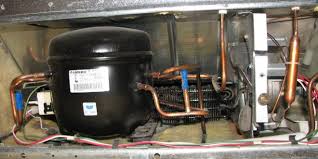
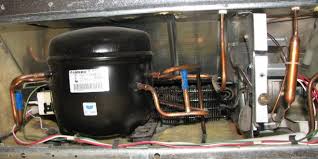
The compressor is often called the heart of the fridge, and that is a fair way to put it.
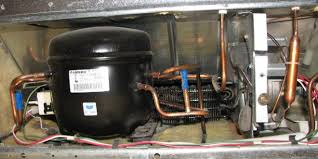
Its job is to move refrigerant through the cooling system. As that refrigerant circulates, it helps pull heat from inside the fridge and release it outside through the coils. That is how the fridge keeps food cold.
A healthy compressor does not run all day without stopping. It starts, runs for a while, cools the fridge, then rests. When the temperature rises again, it starts another cycle.
In hot weather, it may run more often. In a busy home where the fridge door is opened every few minutes, it may also work harder. But it should still cycle. If it runs nonstop, struggles to start, overheats, or stays silent when it should be running, something is wrong.
In Kenyan homes, compressor strain often comes from three things: poor airflow, unstable power, and heavy use.
Clicking Sounds Are Often the First Warning
One of the most common signs of compressor trouble is a repeated clicking sound.
You may hear a click, then a short hum, then another click. A few minutes later, the same thing happens again. The fridge light may still work, but the fridge does not cool properly.
This sound often means the compressor is trying to start but cannot. Sometimes the compressor itself is failing. Other times, the issue is a start relay, overload protector, or capacitor. These smaller parts help the compressor start safely.
In areas where power cuts and voltage changes are common, these parts can fail before the compressor does. If caught early, the repair may be simple and much cheaper than replacing the compressor.
The mistake is ignoring it for days. Every failed start can make the compressor hotter and weaker. A small relay problem can eventually become a compressor replacement if the fridge keeps struggling.
Loud Buzzing, Rattling, or Knocking Should Not Be Ignored
A fridge does not have to be silent, but you probably know what yours normally sounds like. Any new sound deserves attention.
A loud buzz may mean the compressor is under strain or struggling to start. A rattling sound may come from loose mounts or vibration at the back of the fridge. This can happen when fridges are moved around often, especially in rentals or small businesses where appliances are shifted from one corner to another.
If the compressor vibrates too much, it can stress the tubing and joints around it. Over time, that vibration may cause leaks or other cooling problems.
A knocking or banging sound when the compressor stops is more worrying. It may suggest internal wear. The fridge may continue cooling for a while, but it is no longer reliable.
If you hear new or worsening sounds, it is better to call a technician before the fridge stops completely.
A Silent Fridge Does Not Always Mean the Compressor Is Dead
Silence can be tricky.
If the fridge light comes on but there is no hum, no click, and no cooling, the compressor may not be running. But that does not automatically mean it has failed.
The fault could be the thermostat, control board, relay, wiring, or power supply. A technician needs to test whether power is actually reaching the compressor.
If power reaches the compressor terminals and it still does not start, then the compressor may have open or shorted windings. That is more serious and usually points to replacement.
This is why proper diagnosis matters. A technician should not simply listen for a few seconds and say, “compressor imechapa.” They should test before giving you a major quote.
Heat Is One of the Biggest Compressor Killers
Compressors naturally get warm, but they should not become extremely hot.
A fridge releases heat through condenser coils at the back or underneath. If those coils are covered in dust, or if the fridge is pushed tightly against the wall, heat cannot escape properly. The compressor then works harder and runs hotter than it should.
This is common in dusty areas such as Kitengela, Athi River, Mlolongo, and busy parts of Nairobi where dust settles quickly behind appliances. It is also common in small apartment kitchens where fridges are fitted too tightly into cabinets with very little airflow.
If the sides of the fridge are warm, that may be normal. If they are too hot to touch comfortably, airflow may be poor. Pull the fridge slightly away from the wall and clean the coils carefully. If the compressor itself feels extremely hot, switch the fridge off and let it cool before calling a technician.
Running an overheating compressor for too long can finish it completely.
At the coast, humidity and salty air create another problem. In areas like Nyali, Bamburi, Malindi, and Diani, corrosion can affect condenser parts and reduce efficiency. Once the system struggles to release heat, the compressor has to work harder.
Power Problems Damage Compressors Quietly
Many compressor problems in Kenya are linked to electricity.
A voltage drop can make the compressor struggle to start. It draws more current, overheats, and slowly damages the motor windings. A power surge can damage the relay, control board, or compressor directly. A blackout followed by sudden power return can also force the compressor to restart before the system pressure has settled.
If your fridge stopped working after a blackout, storm, or flickering power, electrical damage is a strong possibility.
This is why a fridge guard or voltage protector is useful. It delays restart after power returns and helps reduce damage from unstable voltage. Compared to the cost of compressor replacement, it is a small investment.
If your fridge has already lost one compressor, ask the technician to check the voltage at the socket. If the supply is consistently low or unstable, a new compressor may fail too.
Can a Failing Compressor Be Saved?
Sometimes, yes.
If the problem is outside the compressor, such as the start relay, overload protector, or capacitor, the technician may replace those parts and restore normal cooling. This is why testing is so important.
In some cases, a technician may use a hard-start kit to help a struggling compressor start. This can work for a while, but it is not always a permanent fix. If the compressor is already worn internally, the problem may return.
If the compressor windings are burnt, shorted, or open, there is usually no practical repair. The compressor will need replacement.
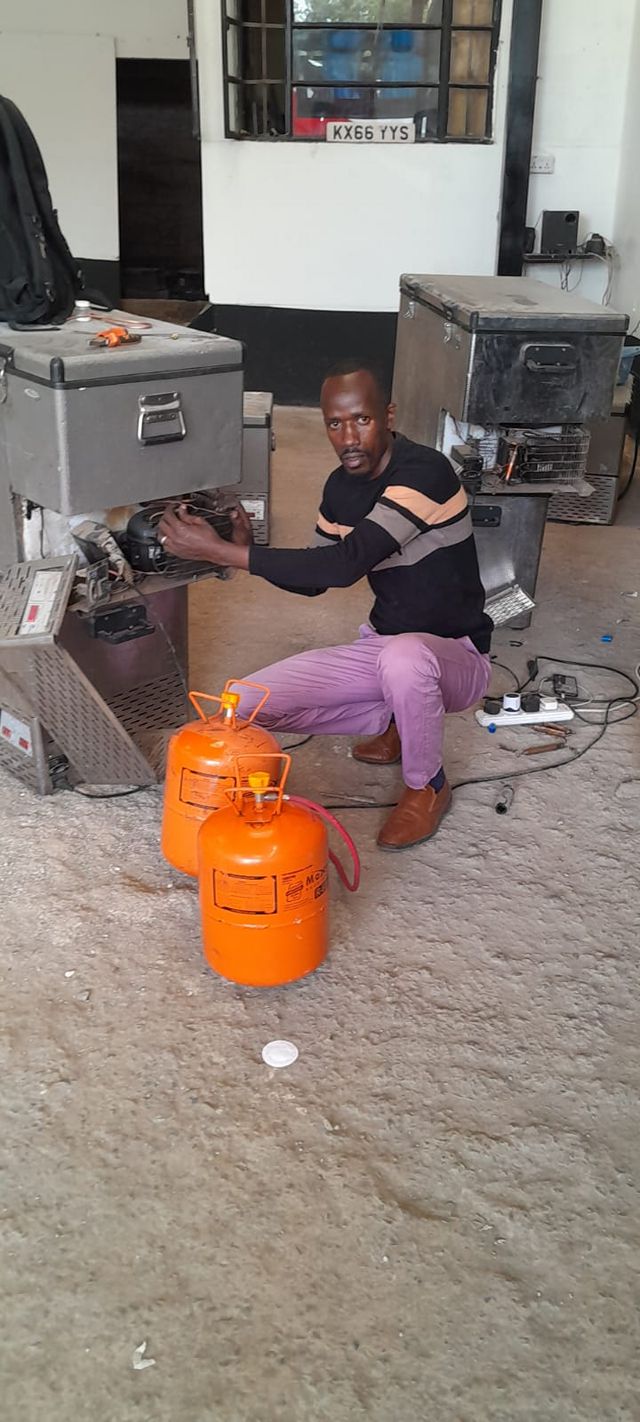
Compressor replacement is not a small job. It involves removing the old compressor, installing the new one, replacing the filter drier, pressure testing, vacuuming the system, and refilling the correct refrigerant. It should be done by someone with the right tools and experience.
Be careful with very cheap reconditioned compressors. Some may work, but many do not last because they were already stressed before being resold. For a fridge you plan to keep, a new compressor is usually the safer choice.
When Compressor Replacement Makes Sense
A compressor can cost a lot, so it is worth asking whether replacement is the right decision.
If the fridge is fairly new, the cabinet is in good condition, the door seals are strong, and the rest of the system is working well, replacing the compressor may be worth it.
But if the fridge is old, rusty, inefficient, has weak seals, and already has other faults, putting more money into it may not make sense.
A practical rule is to compare the repair cost with the price of a similar new fridge. If the compressor repair costs more than half the price of a replacement fridge, and the unit is already eight to ten years old, buying a new one may be the better move.
Also think about electricity use. An older fridge with a tired compressor may consume more tokens than a newer, more efficient model.
A good technician should help you weigh the numbers honestly. They should not push compressor replacement if the appliance is clearly near the end of its useful life.
What a Good Technician Should Check
A reliable technician does not guess. They test.
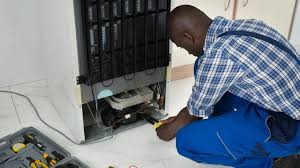
They should check whether power is reaching the compressor. They should test the relay, overload protector, and capacitor. They should measure winding resistance. They should inspect the coils, airflow, and general condition of the fridge. If the compressor runs but cooling is still poor, they may check system pressures to see whether it is pumping properly.
They should also explain the findings in normal language.
For example, they might say, “The compressor is receiving power, but the windings are open,” or “The compressor is fine; the start relay has failed.” That kind of explanation helps you know whether you are dealing with a small repair or a major replacement.
This is where The Real Plug can be useful. The platform helps users find vetted appliance repair professionals who handle fridge compressor diagnosis, relay replacement, sealed-system work, and compressor replacement. Reviews can also help you see whether a technician explains repairs clearly and stands by their work.
How to Protect Your Fridge Compressor
Once your compressor is repaired or replaced, protecting it should become a habit.
Keep the fridge in a well-ventilated spot. Do not push it tightly against the wall or box it into a cabinet with no airflow. Clean the condenser coils every few months, especially if you live in a dusty area. Use a fridge guard or voltage protector. Check the door seal so the compressor is not running all day to make up for cold air escaping.
Do not overload the freezer so much that air cannot move properly. Avoid placing hot food straight into the fridge. Keep the fridge away from cookers, direct sunlight, and other heat sources.
If you move house, keep the fridge upright as much as possible. If it has been tilted during transport, let it stand upright for several hours before switching it on. This gives the compressor oil time to settle.
For businesses such as butcheries, cafés, shops, restaurants, and Airbnbs, scheduled servicing can help prevent expensive breakdowns. A technician can check current draw, vibration, coils, seals, and cooling performance before the compressor fails during a busy day.
The Bottom Line
A failing compressor is serious, but it should not be assumed without proper testing.
Clicking sounds, overheating, silence, weak cooling, loud buzzing, and knocking can all point to compressor trouble. But some of these signs can also come from cheaper, easier-to-fix parts.
The smartest move is to act early. Check the basics, protect the fridge from poor airflow and unstable power, and call a technician who tests before replacing anything.
In Kenya, where a fridge protects food, stock, and daily routines, the compressor works hard. Treat it well, and when it starts giving warning signs, do not wait until the fridge becomes a warm cupboard.