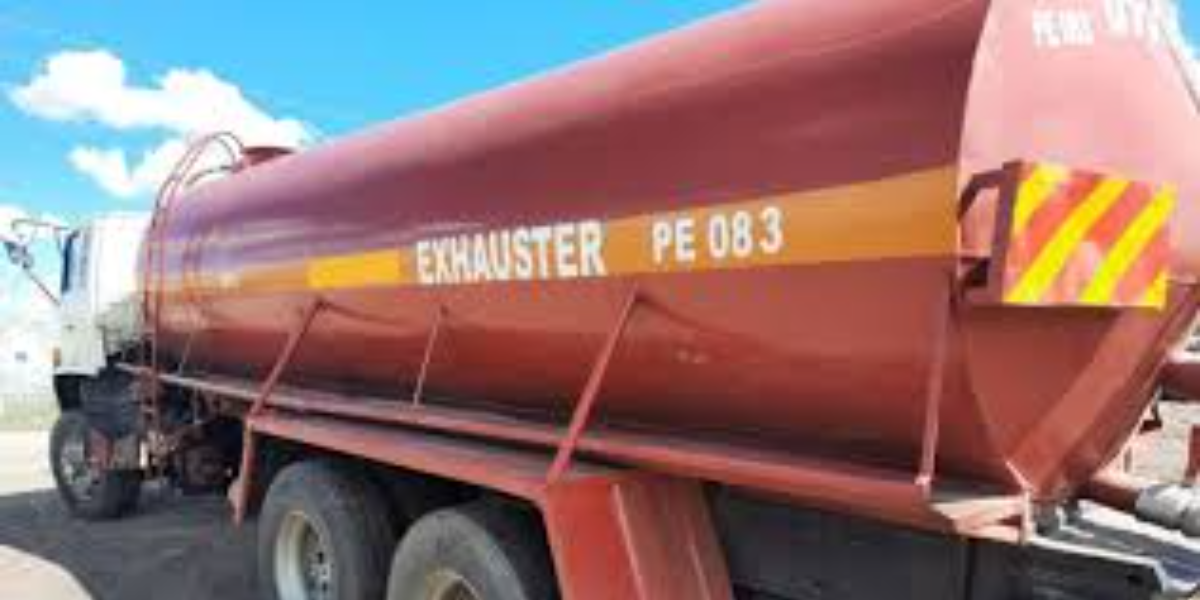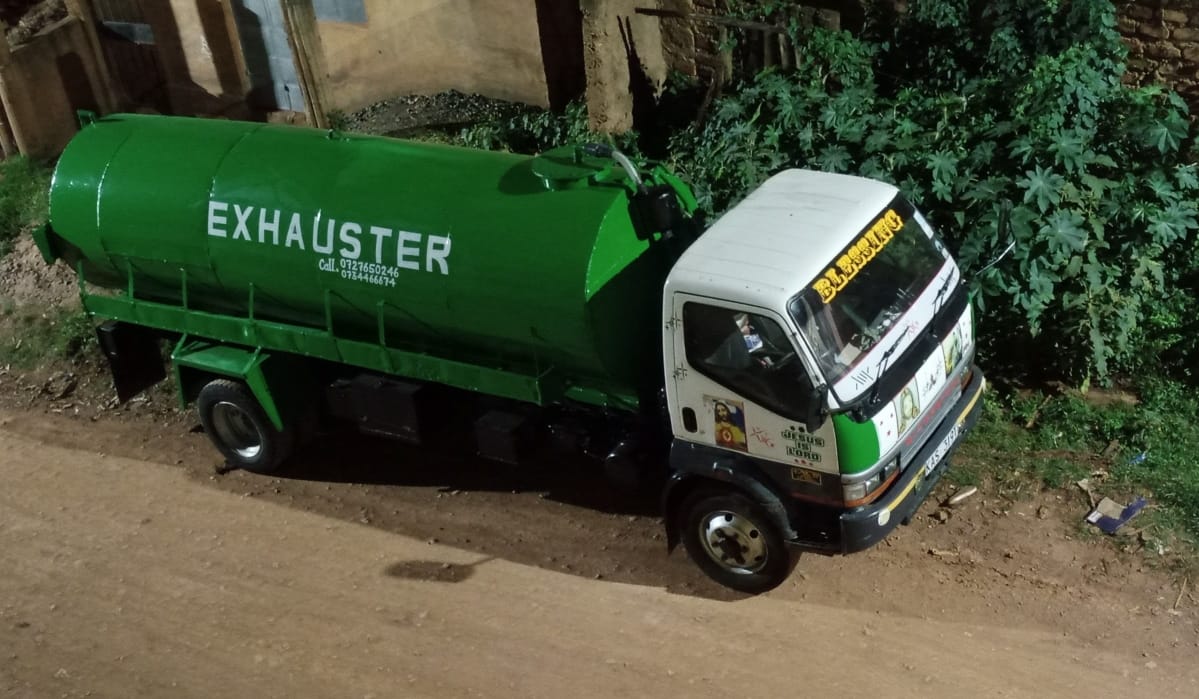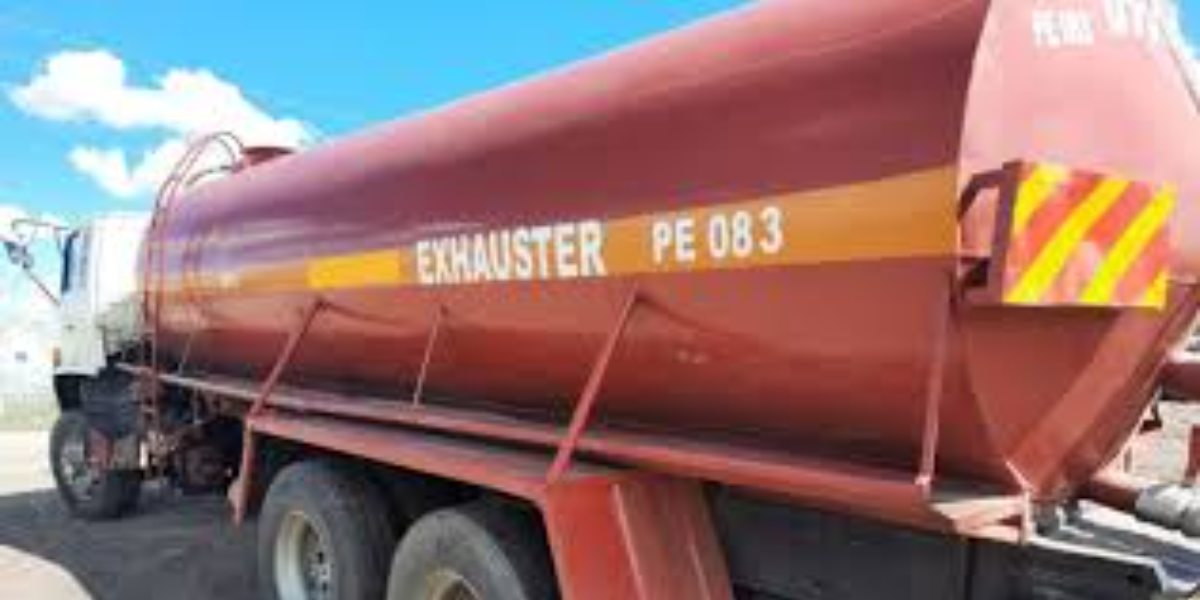


Many Kenyans use the words septic tank, pit latrine, biodigester, exhauster, and honey sucker as if they mean the same thing. But they do not. These systems handle waste differently, fill up differently, and need different emptying methods.
That difference matters when you are calling a service provider. If you say “ni choo imejaa” without explaining the system, the crew may arrive with the wrong expectations. They may charge extra, refuse the job, or handle the system badly.
Whether you own a home, manage rentals, run a school, or are building a new property, it helps to know what you have underground.
Pit Latrine Emptying in Kenya
A pit latrine is the simplest waste system. It is basically a deep hole in the ground with a slab and toilet structure above it. Waste drops directly into the pit. There is no flushing system, no chambers, and no proper treatment process apart from slow natural breakdown.
Pit latrines are still common in rural homes, low-cost plots, informal settlements, farms, schools, and areas where water supply is limited. In places with plenty of land, people may abandon a full pit and dig another one. In urban and peri-urban plots, that is often impossible because space is limited.
How Pit Latrines Fill Up
A pit latrine fills as waste accumulates. Liquids may slowly seep into the surrounding soil, while solids remain in the pit. The filling speed depends on the number of users, soil type, water table, and pit depth.
In dry rural areas, a pit latrine may last many years. In crowded towns or areas with poor drainage, it may fill much faster.
How Pit Latrine Emptying Works
Pit latrine emptying is often harder than septic tank emptying because the sludge is thicker. A honey sucker or vacuum truck may be used, but the crew may need to add water to loosen the waste before pumping.
Some pits are difficult to empty because they contain rubbish, stones, sanitary products, plastics, or compacted sludge. Not every exhauster provider accepts pit latrine jobs, so you should mention clearly what system you have before booking.
Septic Tank Emptying in Kenya
A septic tank is common in many Kenyan homes that are not connected to a public sewer line. You will find them in areas like Kitengela, Ruiru, Ngong, Syokimau, Juja, Rongai, Nanyuki, and many gated estates.
Unlike a pit latrine, a septic tank works with flush toilets and household wastewater. Waste from toilets, bathrooms, sinks, and sometimes laundry areas flows into an underground tank.
How a Septic Tank Works
Inside the septic tank, heavier solids settle at the bottom as sludge. Oils, grease, and lighter waste float to the top as scum. The liquid in the middle flows out into a soak pit or drainage field.
Bacteria break down some of the waste, but not all. Over time, sludge and scum build up, reducing the tank’s working space. When that happens, the tank needs emptying.
How Septic Tank Emptying Works
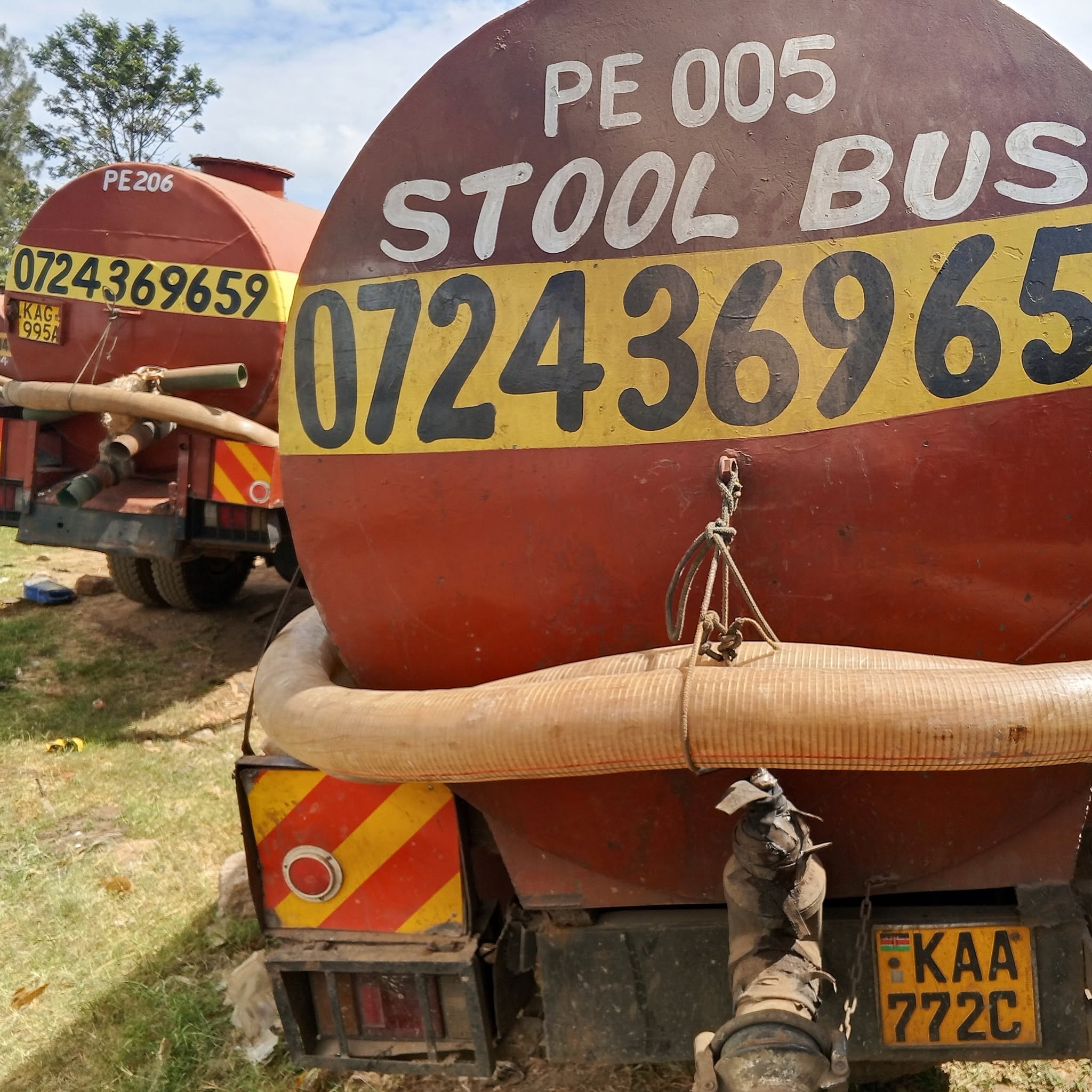
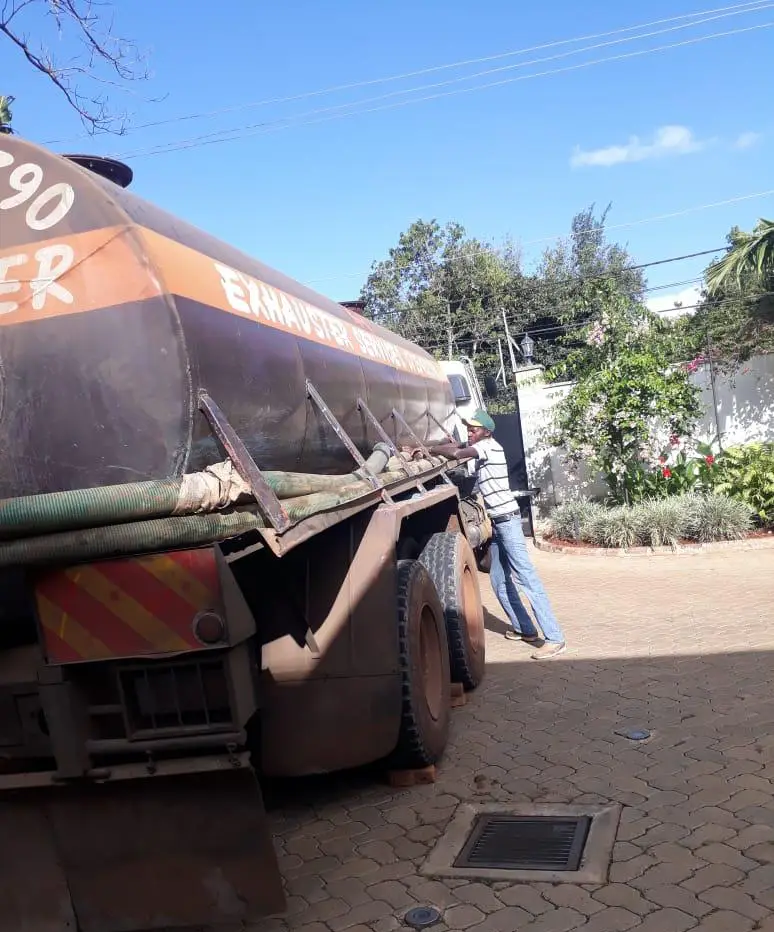
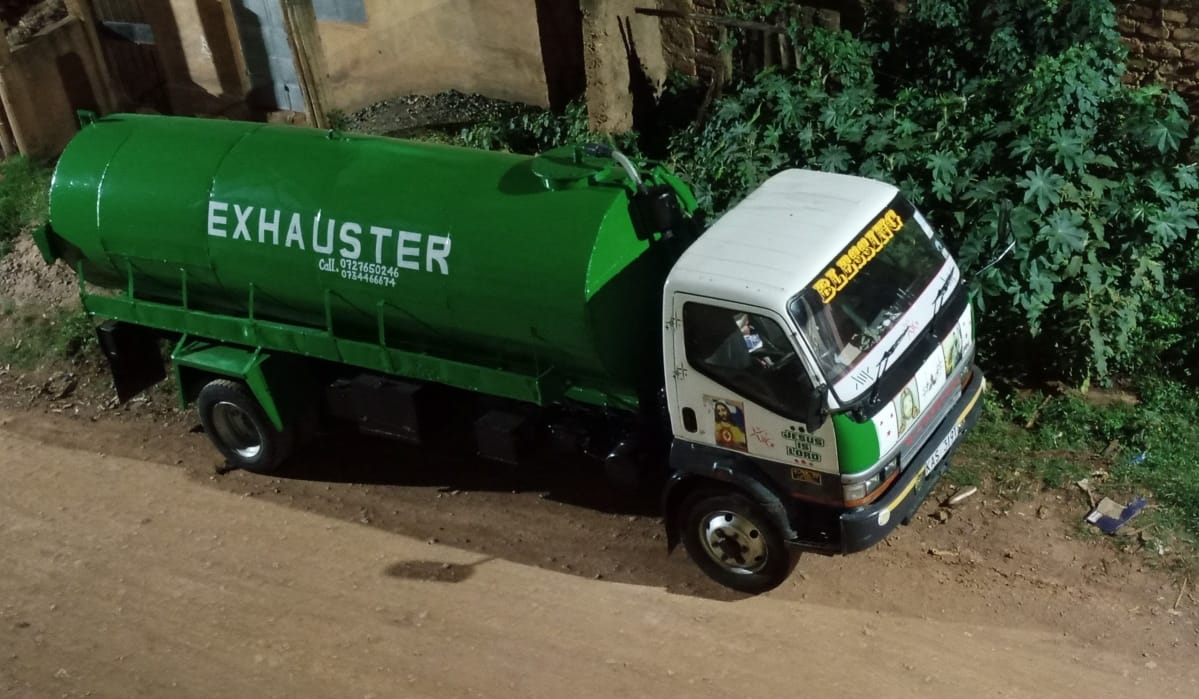
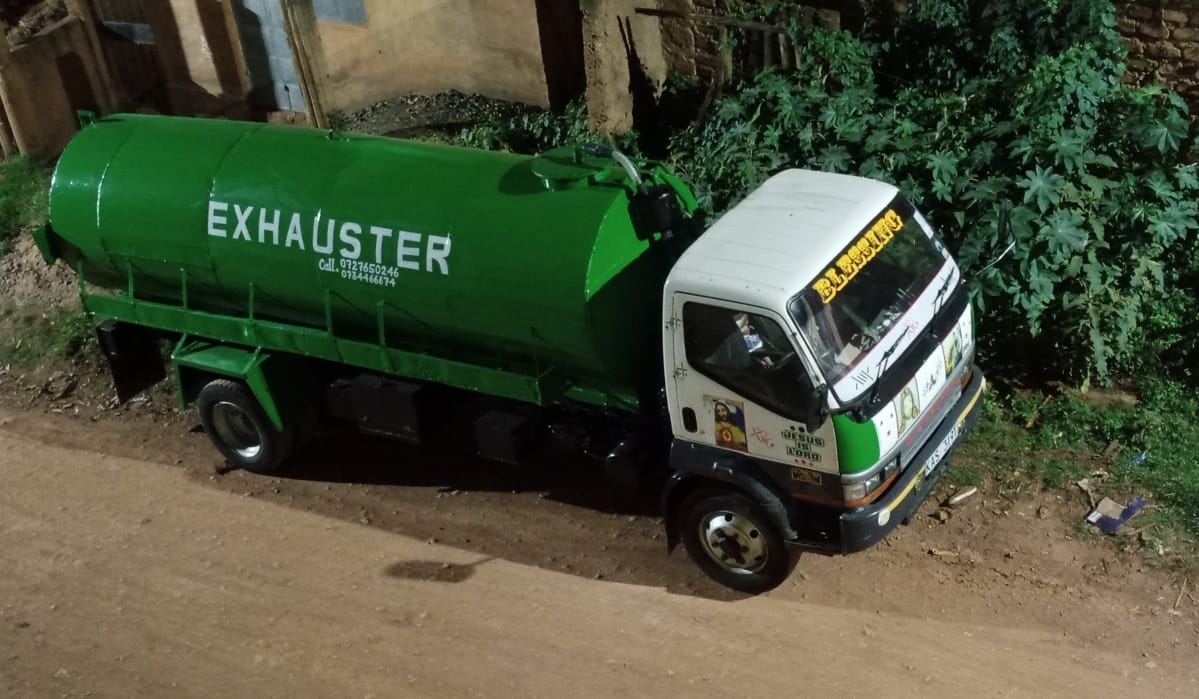
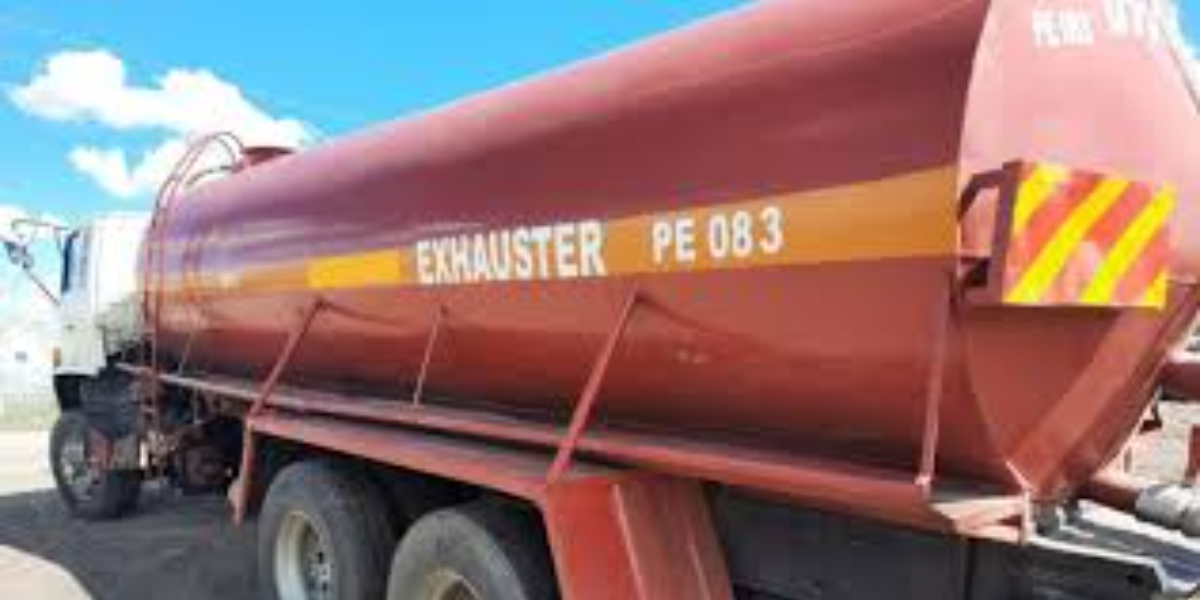
This is the standard exhauster job. A vacuum truck parks near the tank, the crew opens the inspection cover, lowers a suction hose, and pumps out the waste.
A normal household septic tank can usually be emptied faster than a pit latrine because the waste is more liquid. After pumping, the crew should close the tank properly and clean the area.
Septic tanks usually need more frequent emptying than biodigesters. A family home may need service every one to two years, while rental properties may need it more often.
Biodigester Emptying in Kenya
Biodigesters have become popular in newer homes and developments because they reduce how often homeowners call exhausters. They are common in places like Kamulu, Kitengela, Joska, Ruaka, Nanyuki, and many new estates around Nairobi.
A biodigester uses bacteria to break down waste more efficiently than a standard septic tank. It is usually sealed and designed to support biological digestion.
How a Biodigester Works
Waste enters the biodigester, where bacteria break down much of the organic matter. This reduces sludge buildup and produces liquid effluent that flows out to a soak pit or approved drainage system.
Because more waste is digested, biodigesters can go for years before needing emptying. But they are not maintenance-free.
Do Biodigesters Need Emptying?
Yes. Biodigesters still need emptying, just less often than septic tanks. Materials that bacteria cannot digest still settle inside. These include sand, wipes, pads, plastics, grease, and other non-biodegradable items.
A well-installed biodigester serving a normal household may go several years before emptying. But if it is undersized, poorly built, overloaded, or exposed to harsh chemicals, it can fail much sooner.
How Biodigester Emptying Is Different
A biodigester should not usually be pumped completely dry. The remaining sludge contains bacteria needed to restart the digestion process. A knowledgeable provider will leave some active sludge behind unless repairs require full emptying.
This is why you should not hire just any exhauster crew for biodigester emptying. They must understand how the system works.
Key Differences Between Pit Latrines, Septic Tanks, and Biodigesters
The biggest difference is how each system handles waste.
A pit latrine simply stores waste in a hole. A septic tank separates solids and liquids, then sends liquid to a soak pit. A biodigester uses bacteria to break down waste more thoroughly and reduce sludge buildup.
Pit latrines can be harder and messier to empty because the waste is thick. Septic tanks are easier to pump but need more regular emptying. Biodigesters need emptying less often, but they require careful handling to avoid damaging the bacterial process.
Cost also varies depending on location, access, size, and sludge thickness. Pit latrine emptying may cost more than expected because it is labour-intensive. Septic and biodigester emptying may have similar trip costs, but biodigesters save money over time because they are emptied less often.
How to Know Which System You Have
If your toilet does not flush and waste drops directly into a hole, you have a pit latrine.
If you have flush toilets and an underground tank that needs emptying every year or two, you likely have a septic tank.
If your builder or installer mentioned bacteria, gas, low maintenance, or “no frequent exhauster,” you may have a biodigester. Still, it is worth inspecting because some systems marketed as biodigesters are actually basic septic tanks with a new name.
If you are unsure, ask a plumber, exhauster provider, or sanitation professional to inspect the system.
Can One Exhauster Empty All Three?
The same type of vacuum truck can often be used for all three systems, but the method is not the same.
For pit latrines, the crew may need to dilute thick sludge. For septic tanks, they pump out sludge and wastewater in the usual way. For biodigesters, they should avoid pumping everything out unless necessary.
That is why you should describe your system clearly when booking. It helps the provider arrive with the right equipment, quote properly, and avoid damaging your system.
If you are not sure which provider understands your system, The Real Plug can help you find vetted professionals across Kenya, including providers for pit latrine emptying, septic tank services, and biodigester maintenance.
Common Mistakes to Avoid
Do not flush wet wipes, sanitary pads, diapers, condoms, cotton wool, plastics, or grease into any of these systems. They cause blockages and make emptying harder.
Do not assume biodigesters never need emptying. They need less frequent service, not zero service.
Do not hire someone who cannot explain where the waste will be disposed of. Waste should go to approved treatment or disposal facilities.
Do not build over your septic tank, biodigester, or pit access point. When emptying day comes, poor access can make the job more expensive.
Which System Is Best for a New Build?
For rural areas with low water use and enough land, a properly located pit latrine may still serve a basic need, though it must be far from wells and water sources.
For most urban homes, septic tanks remain common and practical when properly built with good soak pits.
For homeowners who want lower maintenance and are willing to spend more upfront, biodigesters are worth considering. They are especially useful where space is limited or where frequent exhauster visits would be expensive.
The best system depends on budget, land size, soil type, water availability, household size, and county requirements.
Final Thoughts
Pit latrines, septic tanks, and biodigesters all manage waste, but they are not the same. Knowing the difference helps you choose the right emptying service, avoid unnecessary costs, and maintain your system properly.
The main rule is simple: know what you have, keep it accessible, use it correctly, and hire providers who understand the system. Sanitation problems are easier to prevent than to fix after they overflow into the compound.