

A full septic tank rarely surprises you without warning. The problem is that many homeowners notice the signs, then explain them away. A slow toilet becomes “maybe the pipe is blocked.” A bad smell becomes “maybe it’s the drainage outside.” A wet patch in the compound becomes “maybe ni mvua ya jana.”
Then one morning, the bathroom floor drain starts bringing back dirty water, and suddenly everyone is looking for an exhauster.
If your home is not connected to a county sewer line, your septic tank needs regular attention. This applies to many homes in Ruiru, Kitengela, Syokimau, Ngong, Juja, Rongai, Athi River, Nanyuki, and plenty of estates around Nairobi and other towns. Knowing the early signs can save you from panic calls, higher costs, and a very unpleasant cleanup.
Slow-Flushing Toilets
One of the first signs your septic tank is full is a toilet that flushes slowly. The water may swirl longer than usual, rise slightly before going down, or fail to clear the bowl properly unless you flush twice.
At first, it may affect only one toilet, especially the one closest to the septic line. In many homes, that is the ground-floor toilet, DSQ bathroom, or guest washroom. This is why people often assume it is a local blockage.
But if more than one toilet is slow, or the problem keeps returning after a plumber has worked on it, the tank may be the real issue. When sludge builds up inside the septic tank, there is less space for new wastewater. The system starts pushing back.
Gurgling Sounds in Drains and Pipes
That “glug-glug” sound after flushing is not just your plumbing being dramatic. Gurgling usually means air is trapped in the drainage system.
When a septic tank is too full, wastewater does not move smoothly. Air gets forced back through pipes and escapes through toilets, sinks, or shower drains. You may hear it after flushing, after draining the washing machine, or when someone showers.
In areas with poor drainage or black cotton soil, this can appear sooner because soak pits do not absorb water well. Parts of Embakasi, Ruiru, Athi River, and some Nairobi outskirts experience this often.
If the gurgling happens repeatedly, do not ignore it.
Bad Smell Around the Compound
A properly working septic system should not make your compound smell. If you notice a sewage smell near the septic tank, inspection chamber, soak pit, or bathroom drains, something is wrong.
The smell may become stronger after rain because water pressure in the ground can push gases up. You may also notice it in the evening when the air is still, or early in the morning before the compound warms up.
In closely built estates, neighbours may smell it before you do. If someone mentions an unusual smell near your fence or drainage line, take it seriously. Septic smells are not just embarrassing; they can point to overflow, leakage, or a tank that needs emptying.
Wet or Very Green Patches in the Yard
A suspiciously green patch of grass can look harmless, even attractive. But if it appears above or near the septic tank or soak pit, it may be wastewater feeding the soil.
When a septic tank is full or the soak pit is failing, liquid can seep near the surface. Grass in that area may become greener, thicker, or wetter than the rest of the compound.
If your yard is paved with cabro, you may notice damp spots between blocks or a section that never dries properly. In dry weather, that is a clear warning.
Do not let children play near such areas. The water may contain harmful bacteria.
Sewage Backing Up Into the House
This is the sign nobody wants to see. If dirty water comes up through the shower drain, toilet, floor drain, or lowest sink, your septic system is already in serious trouble.
The backup usually appears at the lowest point in the house. In a bungalow, it may be the guest bathroom or DSQ toilet. In a maisonette, it may be the ground-floor cloakroom. In flats, ground-floor units suffer first.
At this point, stop using water immediately. Do not flush, shower, do laundry, or run taps unnecessarily. Every extra litre makes the backup worse.
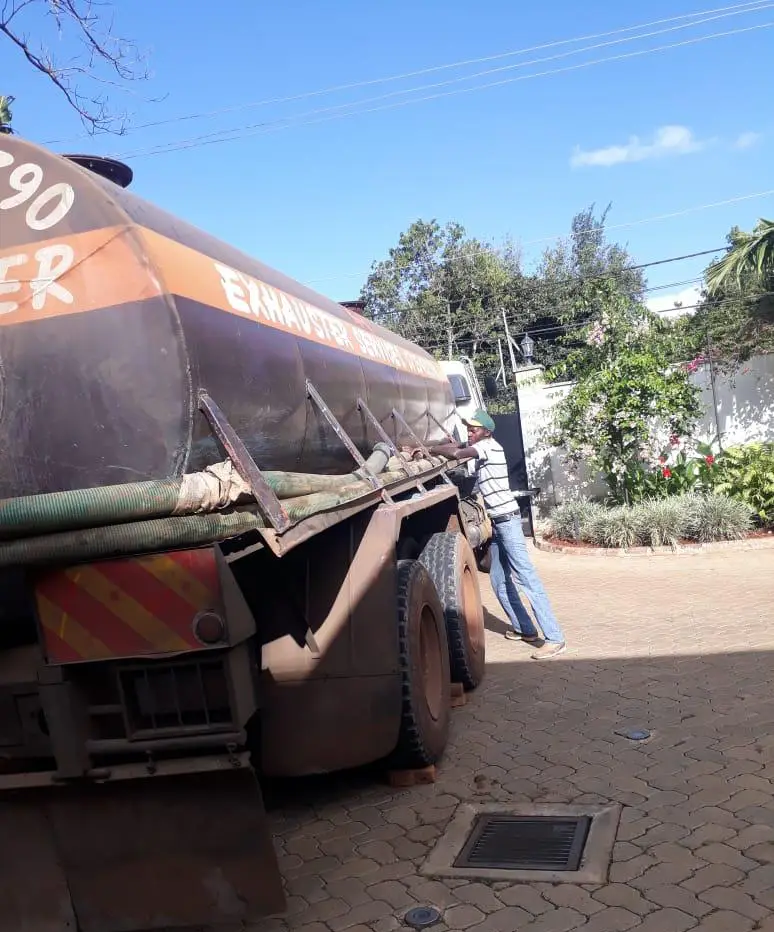
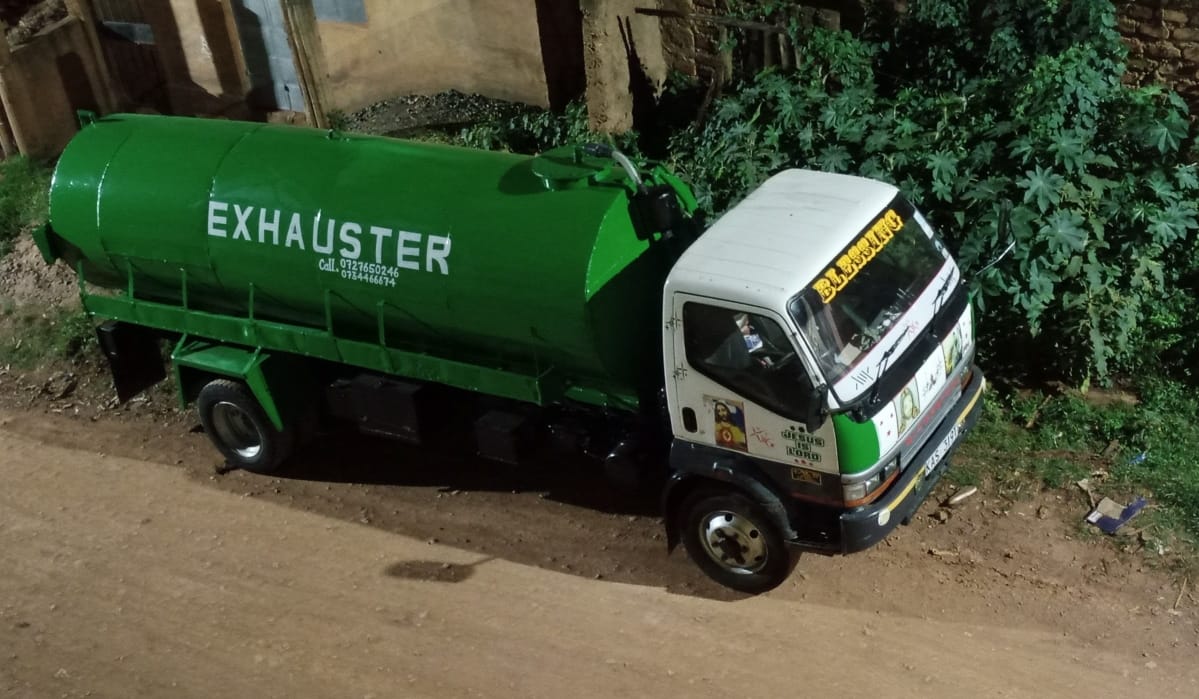
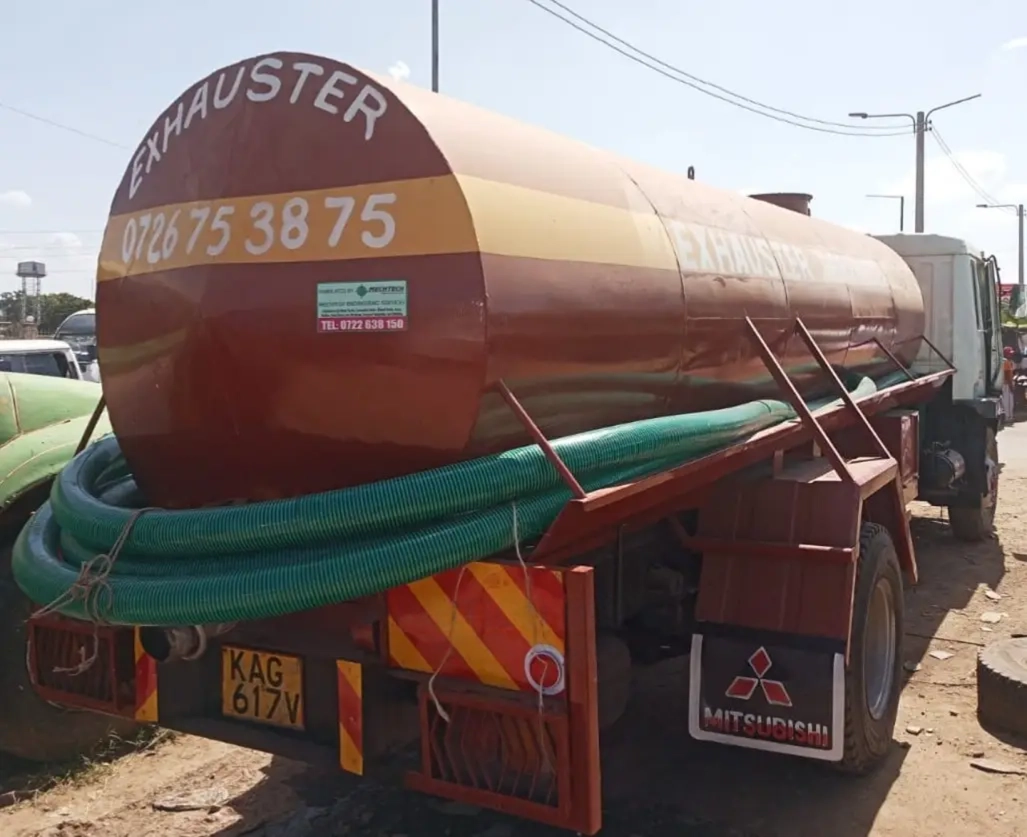
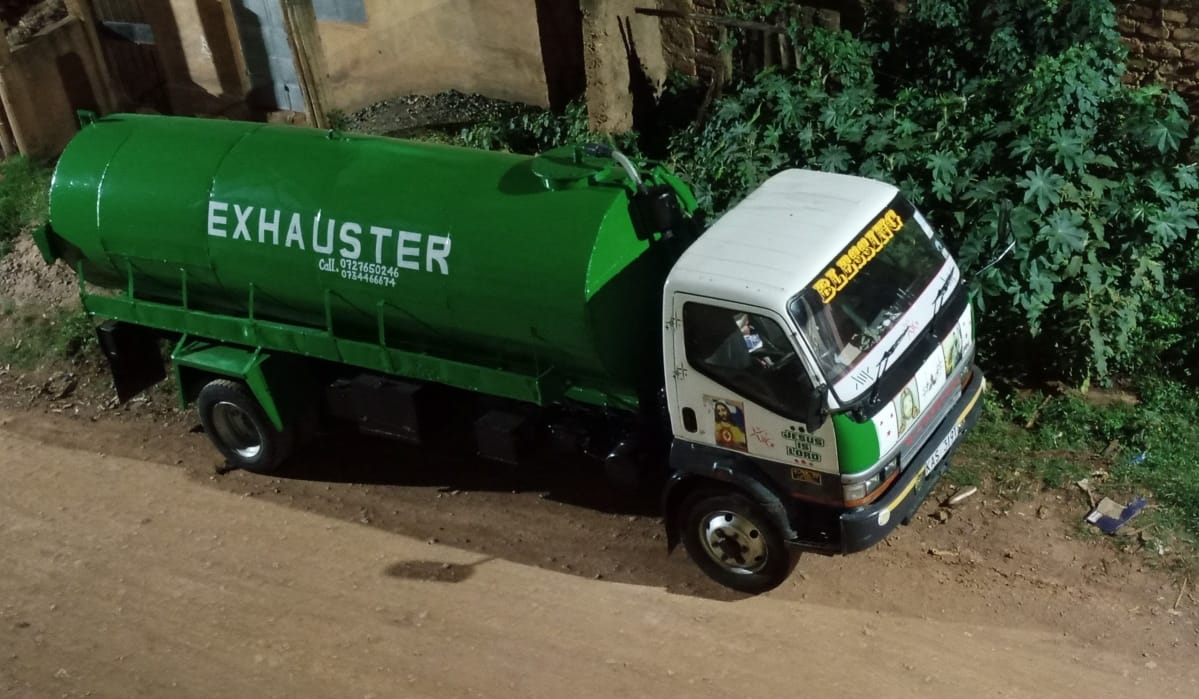
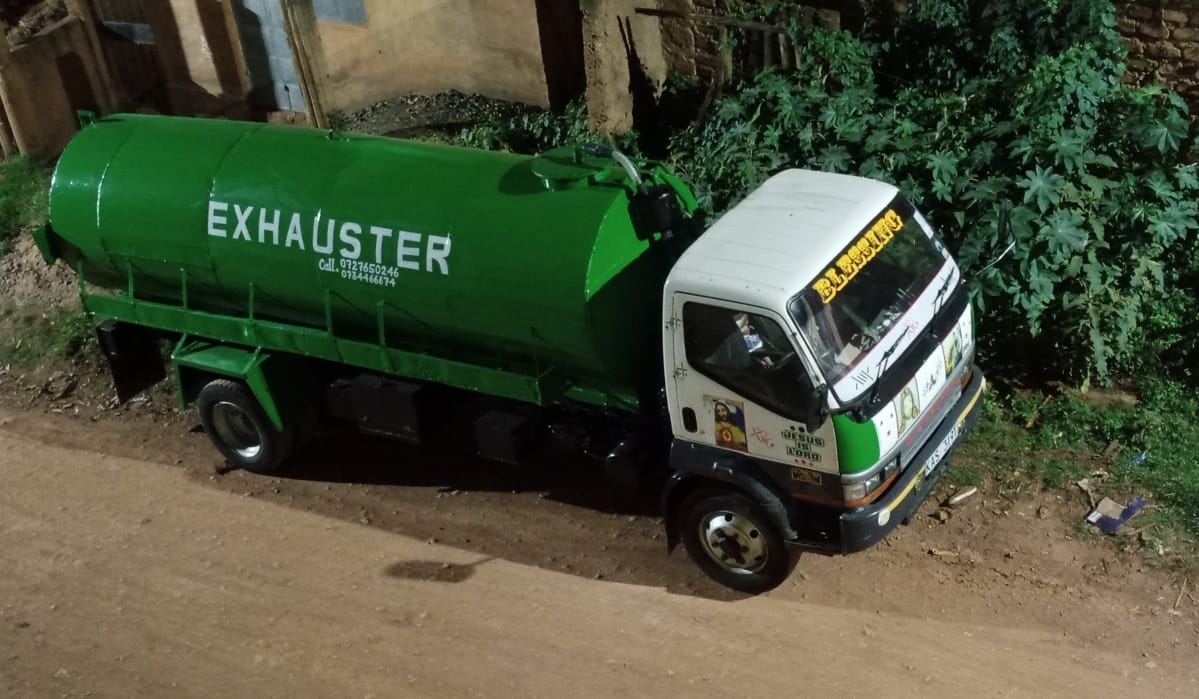
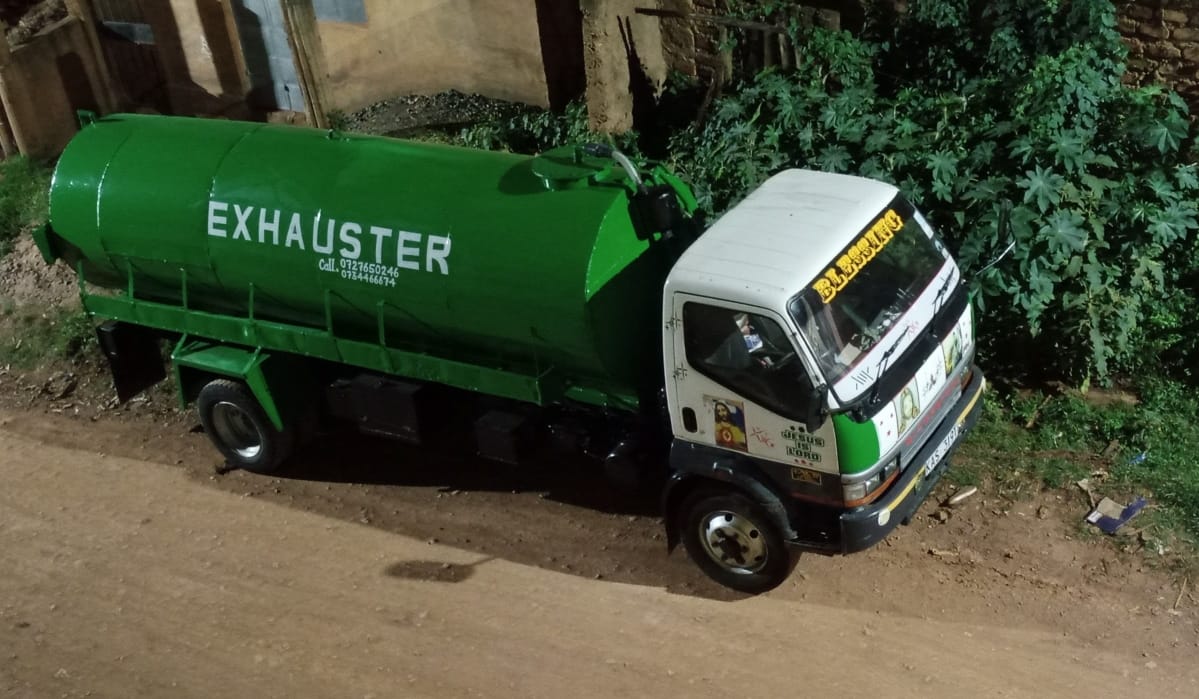
This is when you need an exhauster urgently. A plumber may help clear pipes later, but if the tank is full, the waste must be removed first.
Overflowing Inspection Chambers or Manholes
If an inspection chamber or manhole is full to the top, or sewage is spilling around it, your septic system needs immediate attention.
Caretakers in rental plots often notice this before tenants do. It may start as a small overflow after several people shower, then become constant. In busy rental areas like Kasarani, Utawala, Pipeline, Githurai, and Roysambu, one shared tank can fill quickly because many households depend on it.
Avoid opening manholes carelessly. Sewage gases can be harmful, and the waste itself is a health risk. If you must inspect, use gloves and keep your face away from the opening.
Blockages That Keep Coming Back
If you keep calling a plumber for the same toilet or drain, the problem may not be the pipe. It may be the septic tank.
A plumber can clear the line, but if the tank is already full, waste has nowhere to go. The pipe blocks again, and the cycle repeats. You spend money twice, sometimes three times, before realizing the system needs emptying.
If a blockage returns soon after repair, ask for the tank level to be checked. Many reliable providers can inspect before pumping. Platforms such as The Real Plug can also help you find vetted septic tank emptying professionals across Kenya instead of relying on random contacts when the situation is already stressful.
Why Some Septic Tanks Fill Faster Than Others
Not all homes empty their tanks at the same pace. A family of seven will fill a tank faster than a couple. A house with a DSQ, frequent visitors, or rented extensions will also generate more wastewater.
Tank size matters too. Some developers install small tanks to save on construction costs, especially in fast-growing areas. A small tank serving a large household will fill quickly.
What goes into the system also matters. Wet wipes, sanitary pads, diapers, condoms, cotton wool, and cooking grease do not break down properly. They block pipes and reduce tank space.
Leaking toilets and taps are another silent problem. A running toilet can send large amounts of water into the septic system daily, filling it faster than expected.
What to Do When You Notice the Signs
Once you notice two or more warning signs, start acting. Reduce water use in the house. Avoid flushing unnecessarily. Stop laundry if drains are already slow.
Then contact a reliable exhauster provider and explain the symptoms clearly. Mention your location, tank access, and whether there is backup or overflow. Ask whether they are licensed and where they dispose of the waste.
Keep the receipt after the job. Write down the date of emptying. If the tank fills again unusually fast, you may have a bigger issue such as a failed soak pit, broken pipe, or undersized tank.
Final Thoughts
Your septic tank will usually warn you before it overflows. Slow toilets, gurgling drains, bad smells, wet patches, sewage backup, overflowing manholes, and repeated blockages are not small things to brush aside.
The earlier you act, the cheaper and cleaner the solution is. Waiting until sewage enters the house turns a routine service into a messy emergency.
Listen to your home. When the signs appear, call the right people, empty the tank properly, and keep your system on schedule.
SEO Metadata