

If you have ever called several exhauster companies for the same septic tank emptying job and received very different prices, you are not alone. One provider may quote KSh 6,500, another KSh 9,000, and a third one KSh 14,000. At first, it feels like someone is trying to take advantage of you.
But septic tank emptying is not priced like a packet of unga at the supermarket. The final cost depends on the truck, distance, access, urgency, disposal fees, waste type, and the provider’s level of professionalism.
That said, not every high quote is fair, and not every cheap quote is a good deal. The trick is knowing what affects the price so you can tell the difference.
Septic Tank Emptying Is Not a One-Size-Fits-All Service
Two homes can be in the same estate and still pay different prices. One septic tank may be near the gate with a proper manhole cover. The other may be behind the house, under cabro, with no easy access. One job may take 30 minutes. The other may take two hours.
That difference affects labour, fuel, equipment use, and risk.
A good provider should ask questions before quoting. Where are you located? What size is the tank? Can the truck access the compound? Is the tank overflowing? Do you need daytime or emergency service?
If they quote without asking anything, they are guessing.
Truck Size Affects the Price
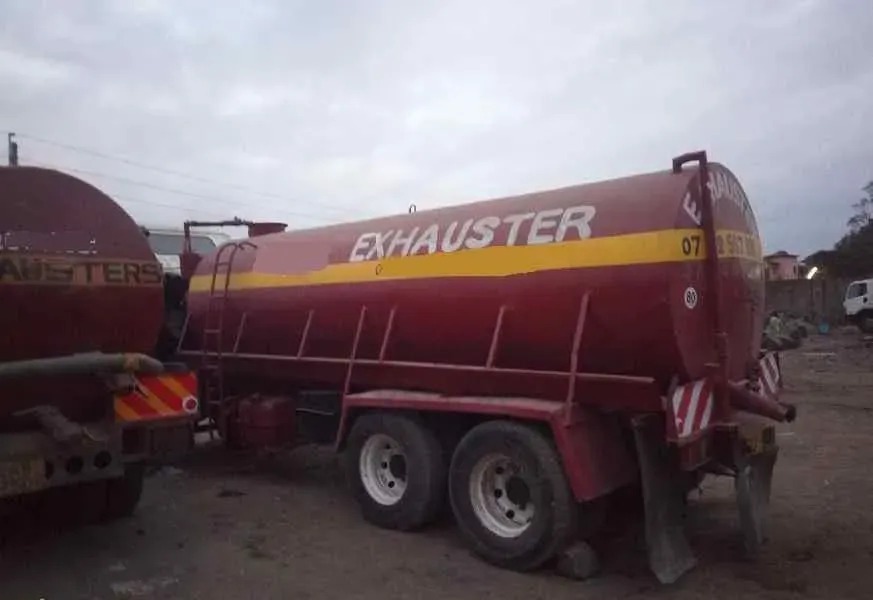
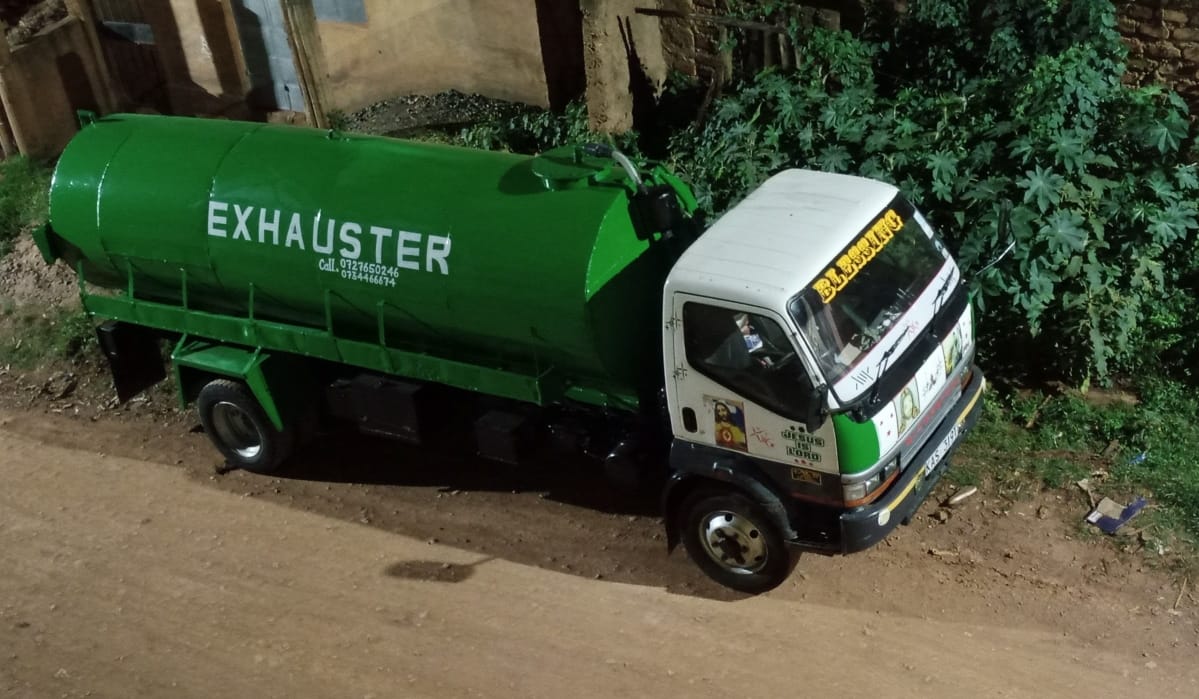
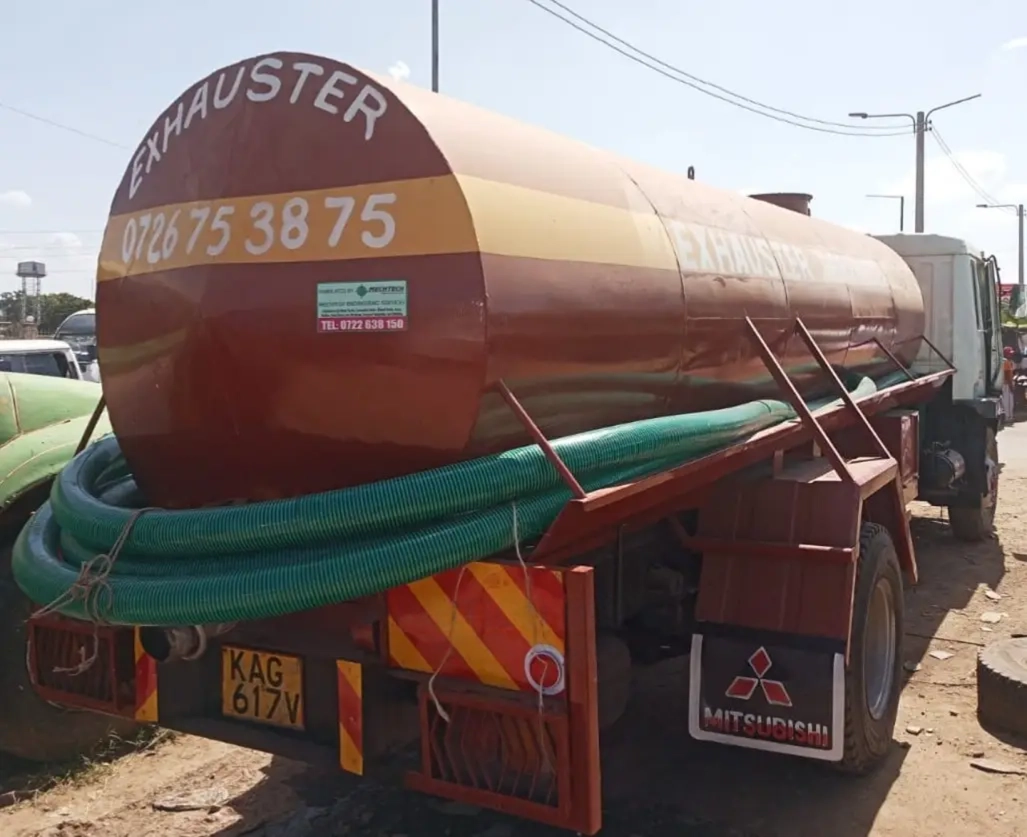
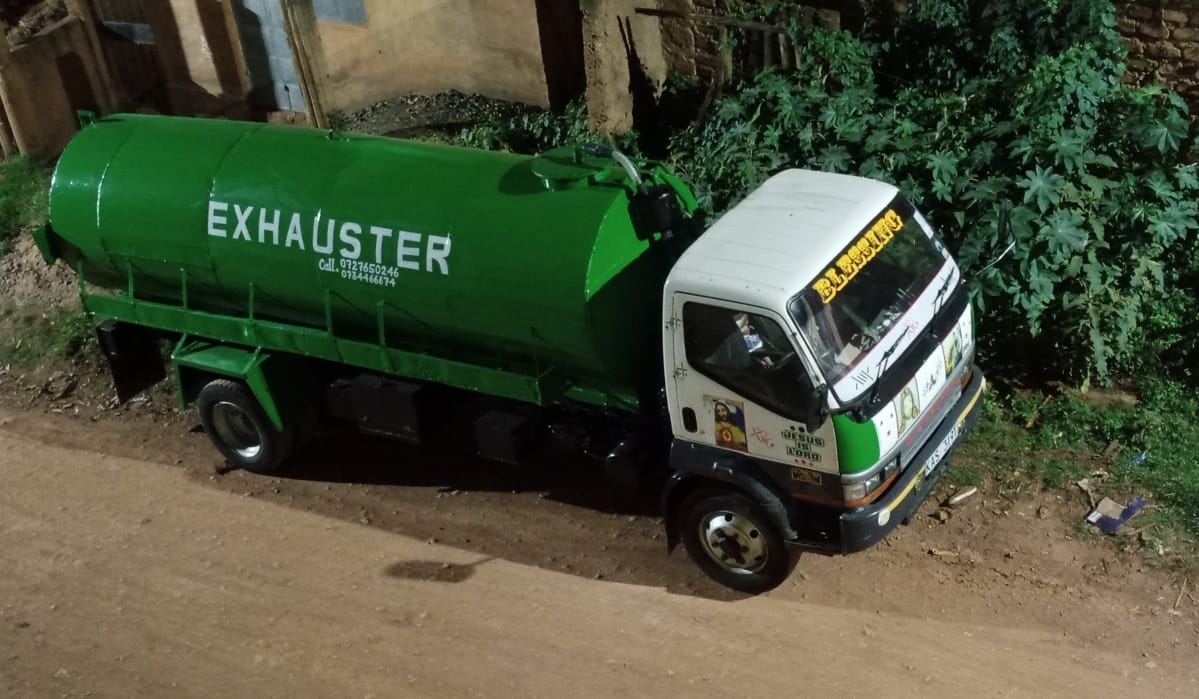
Exhauster trucks come in different sizes. Some carry around 3,000 to 5,000 litres, while larger trucks may carry 8,000 to 12,000 litres.
A smaller truck may be cheaper per trip, but if your tank is large, it may need two trips. A bigger truck may charge more upfront, but it can finish the job in one round.
This is why a KSh 7,000 quote may not always be cheaper than a KSh 11,000 quote. If the cheaper truck must make two trips, the final amount may become higher.
Distance and Location Matter
Fuel is one of the biggest costs in exhauster services. The truck must travel from its yard to your property, then from your property to an approved disposal site, and finally back to its base.
A provider near your area may charge less than one coming from far away. For example, a truck already operating around Embakasi may serve nearby estates more affordably than one travelling from the other side of Nairobi.
Distance also affects time. Traffic, bad roads, and long routes to disposal sites all increase operating costs.
This is why finding a provider close to you matters. Platforms such as The Real Plug can help users compare vetted professionals by location instead of relying on random numbers from social media or wall posters.
Access to the Septic Tank Can Increase the Cost
Access is one of the most common reasons prices change on-site.
If the truck can park close to the septic tank, the work is easier. If the crew must run a long hose through a narrow path, across a neighbour’s compound, or around a building, the job takes more effort.
Some homes also have tanks covered by concrete or cabro with no proper inspection cover. If the crew has to break a slab, open a hidden tank, or patch the area afterwards, the cost may increase.
This is not always a scam. Sometimes it is genuine extra work. The problem starts when the provider does not explain it clearly before beginning.
Emergency Jobs Cost More
A scheduled weekday job is usually cheaper than a late-night emergency. When sewage is backing up into bathrooms at 11 p.m., the provider must mobilize a crew quickly, deal with security issues, and possibly work outside normal hours.
Weekend and public holiday jobs can also cost more. During rainy seasons, demand rises because many tanks overflow or drainage systems fail. When trucks are busy, prices often go up.
The best way to avoid emergency pricing is to empty your septic tank before it becomes urgent. Waiting until there is sewage in the compound removes your bargaining power.
Disposal Fees Are Part of the Price
Proper sewage disposal is not free. Licensed exhauster providers must take waste to approved treatment or disposal facilities. These facilities may charge fees, and the provider includes that cost in the quote.
This is one reason licensed providers may appear more expensive than informal operators. A very cheap provider may be avoiding disposal fees by dumping waste illegally in rivers, quarries, bushes, or open land.
That shortcut is dangerous. It harms the environment and can create legal problems if the waste is traced back to your property.
Always ask where the waste will be disposed of. A serious provider should answer clearly.
Type of Waste Also Matters
Normal domestic septic waste is usually easier to pump than thick pit latrine sludge, grease trap waste, or sewage mixed with floodwater.
If the sludge is thick, the crew may need to add water, use extra time, or work carefully to avoid blocking the pump. Restaurants and hotels may also pay more when grease traps are involved because grease needs different handling.
If the issue includes a blocked pipe, the exhauster may not solve everything. You may also need a plumber or drainage specialist, which adds to the total cost.
Licensed Companies Have Higher Operating Costs
A professional company has costs that a casual operator may not carry. These include licensing, permits, insurance, truck maintenance, staff salaries, protective gear, yard rent, and proper disposal records.
A one-truck operator may charge less, and some do good work. But if the truck breaks down or the job becomes complicated, they may not have backup.
A broker may charge more without adding real value. Brokers do not always own trucks. They take your booking, call another provider, and add their margin. If something goes wrong, accountability becomes difficult.
Before booking, ask whether the provider owns the truck, where it is coming from, and whether they can issue a receipt.
How to Tell If a Quote Is Fair
A fair quote should make sense once the provider understands your job. It should consider location, tank size, access, timing, disposal, and cleanup.
Ask what the price includes. Does it cover pumping, transport, disposal, opening the slab, disinfecting, and receipt? Confirm these details on WhatsApp where possible.
Be cautious if a provider refuses to explain the price, cannot say where they dispose of waste, or pressures you to pay a large deposit before sharing basic details.
Also be careful with extremely low quotes. Cheap can become expensive if the provider does an incomplete job, dumps illegally, damages your property, or adds surprise charges later.
How Homeowners and Landlords Can Save Money
The easiest way to save money is to plan ahead. Schedule septic tank emptying before it becomes an emergency. Keep your tank accessible. Do not build permanent structures over the inspection cover.
Avoid flushing wet wipes, sanitary pads, diapers, condoms, cotton wool, plastics, or grease. These items fill tanks faster and create blockages.
If you manage rentals, keep a service record and plan regular emptying based on usage. A property with many tenants should not wait until complaints begin.
You can also compare providers in advance. Save reliable contacts before you need them urgently.
Final Thoughts
Septic tank emptying prices differ because the jobs, providers, distances, and risks differ. A low price is not always a bargain, and a high price is not always exploitation.
What matters is transparency. A reliable provider should explain the cost, arrive prepared, dispose of waste legally, and leave your property clean.
For homeowners, landlords, and businesses in Kenya, the best approach is simple: ask the right questions, compare properly, avoid panic booking, and work with providers who can be trusted. Septic tank emptying may not be exciting, but when handled well, it stays exactly where it belongs — out of sight and out of your daily stress.