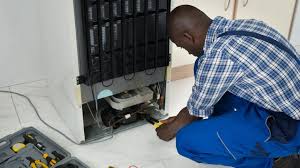


A washing machine breakdown can throw a whole home off balance.
One minute you are planning to finish laundry quickly. The next, there are wet clothes in buckets, water on the floor, and uniforms that still need to be ready by morning. In a busy Nairobi apartment, a rental in Kahawa West, a family home in Nakuru, or an Airbnb in Kilimani, a faulty washer is not a small inconvenience. It interrupts the day immediately.
Washing machines in Kenya work under tough conditions. Hard water, borehole water, power surges, heavy loads, and frequent use all take a toll. Many faults do not happen suddenly. They build up slowly through clogged filters, worn belts, tired pumps, weak door locks, and overworked motors.
The good news is that many washing machine problems follow familiar patterns. Once you know what the signs mean, you can handle simple checks safely, call a technician at the right time, and avoid turning a small repair into a major bill.
When the Washing Machine Will Not Start
You press the power button, and nothing happens. No light. No sound. No movement.
Start with the socket. Washing machines use more current than small appliances, and worn sockets are common in older buildings. Plug in a phone charger, kettle, or another appliance to confirm whether the socket is working.
If the socket is dead, the problem may be electrical, not the washing machine. If the socket works but the washer stays off, then the fault is inside the machine.
For front loaders, the door lock is a common issue. These machines will not start unless the door is properly locked. If the door does not click firmly, or if it clicks but the machine remains dead, the door interlock switch may have failed.
Moisture, detergent residue, and corrosion can affect the lock over time, especially in humid or hard-water areas. A technician can test the switch and replace it if needed.
If the machine has lights but no cycle starts, the control board may be damaged. Power surges after blackouts can affect boards, especially in modern washers with digital controls. Some boards can be repaired, while others need replacement.
This is one reason a voltage protector or stabilizer is useful for washing machines, not just fridges and TVs.
When Water Will Not Fill the Drum
If the machine starts but the drum stays dry, begin with the tap.
It sounds obvious, but taps are often closed after cleaning, plumbing work, or water rationing. Make sure water is reaching the machine.
Next, check the inlet hose and filter. Most washing machines have small mesh filters where the hose connects to the back of the machine. In Kenya, water often carries sediment, especially in areas using borehole supply or storage tanks. Over time, those filters clog and reduce water flow.
Turn off the tap, disconnect the hose carefully, and clean the filter with an old toothbrush. If the water pressure is fine and the filter is clean but the machine still does not fill, the inlet valve may be faulty.
The inlet valve controls water entering the machine. If it burns out or gets blocked internally, water will not flow even when the machine is calling for it. That is a technician job.
When Water Fills and Drains Immediately
Sometimes the washer fills with water, then drains it straight away. Many people assume the machine is faulty, but the setup may be the problem.
Check the drain hose height. If the hose is lying too low, water can siphon out as fast as it enters. The hose should usually be raised above the drum water level and secured properly.
If lifting and securing the drain hose solves the issue, no repair is needed.
If the hose is already positioned correctly and water still drains immediately, the problem may be the pressure switch, drain pump, or control system. The pressure switch tells the machine how much water is inside. If it gives the wrong signal, the washer may behave strangely.
A technician can test the pressure system and pump to confirm the cause.
When the Drum Will Not Spin
A washer that fills and washes but refuses to spin is one of the most common repair calls.
Start with the load. Washing machines are designed to protect themselves from unbalanced loads. One heavy towel, a duvet, or a blanket bunched on one side can stop the spin cycle. Open the door, redistribute the clothes, and try again.
In many Kenyan homes, people overload washers to finish laundry quickly, especially when water is limited or laundry has piled up. But forcing too much into the drum strains the motor, belt, bearings, and suspension.
If you have to push clothes down to close the door, the load is too heavy.
If the load is balanced and the drum still does not spin, the belt may be loose, worn, or snapped. You may hear the motor running, but the drum stays still. Belt replacement is usually a straightforward repair if the part is available.
For beltless direct-drive machines, the issue may involve the motor, control board, sensor, or wiring, which requires proper diagnosis.
When the Washer Makes Loud Noise During Spin
A noisy spin cycle is not something to ignore.
If the machine bangs loudly and moves across the floor, it may be unbalanced, overloaded, or not level. Check whether all four feet sit firmly on the floor. Uneven floors are common in rentals and older homes, and even a small tilt can make a washer shake badly.
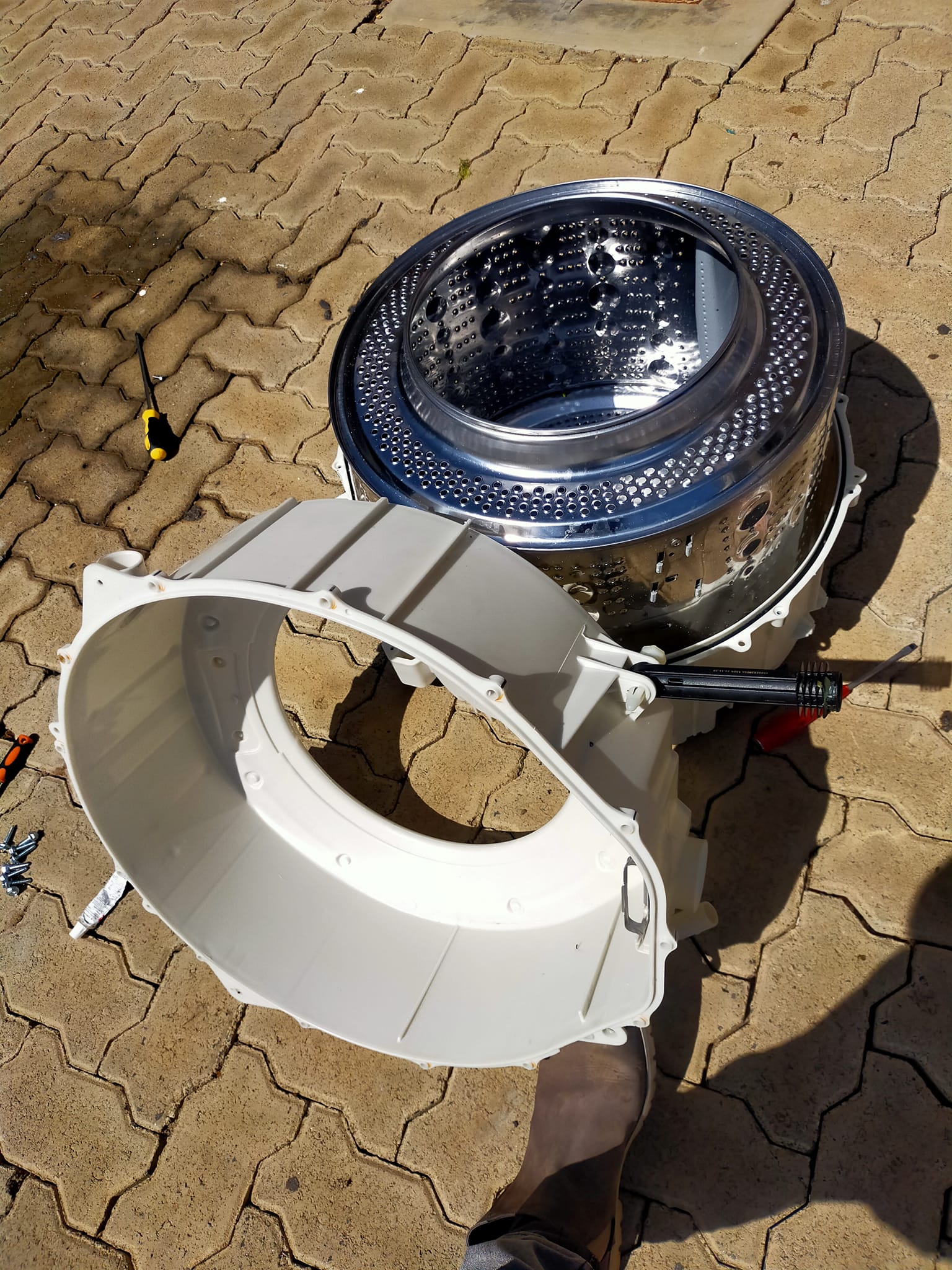
If leveling and proper loading do not help, the shock absorbers or springs may be worn. These parts control drum movement during spin. When they fail, the drum slams around and can damage the outer tub.
A grinding or roaring sound is more serious. It often points to worn drum bearings. This usually happens after years of use, repeated overloading, or water leaking through the tub seal.
Bearing replacement can be a major job because the drum may need to be removed. On some modern machines with sealed drums, replacing bearings alone may not be practical. In that case, the technician should tell you honestly whether the repair is worth it.
When Water Leaks Onto the Floor
Water leaks cause panic, and rightly so. Water and electricity do not mix.
Turn the machine off at the wall before inspecting anything.
For front loaders, check the door seal. Small tears, trapped coins, hair clips, or hardened detergent can stop it from sealing properly. If water leaks from the front during wash, the rubber gasket may need cleaning or replacement.
Also check the detergent drawer. Too much detergent, powder buildup, or hard-water deposits can block the drawer and cause water to overflow. Remove the drawer and clean it thoroughly.
Look behind the machine at the inlet hose. If it is cracked, loose, or kinked, water may leak during filling. The drain hose can also split or disconnect, especially if the machine has been moved recently.
If the leak only appears during draining, the pump housing or drain hose may be damaged. Coins, sand, bra wires, and small items from pockets can damage the drain pump. This is why checking pockets before washing matters more than most people think.
If you see rusty water under the machine, stop using it and call a technician. Rusty leaks can point to bearing or tub seal problems.
When the Machine Stops Mid-Cycle With Water Inside
You return to find the washer full of water, clothes soaked, and the cycle unfinished.
Most of the time, this is a drainage issue.
Front loaders usually have a small filter access panel near the bottom front. Place a towel down before opening it because water may come out. Inside, you may find coins, lint, hairpins, buttons, bra wires, or small fabric pieces.
Clean the filter and try the drain cycle again.
If the filter is clear but the machine still will not drain, the drain pump may be jammed or burnt out. You may hear a low hum with no water movement. That usually needs repair or replacement.
If the machine drains but refuses to spin afterward, the water level sensor or pressure switch may be giving the wrong signal. The machine may still think water is inside, so it refuses to spin for safety.
A technician can test the pump, pressure switch, and drainage system properly.
When Clothes Come Out Smelly or Dirty
If clothes smell worse after washing, the machine itself may need cleaning.
Soap scum, fabric softener, lint, and dirt can build up behind the drum and inside rubber seals. In hard-water areas, mineral deposits make the buildup worse. Over time, that hidden grime turns into mold and produces a bad smell.
Run an empty hot wash regularly using a washing machine cleaner. Some people use white vinegar, but always check your machine manual first because not every manufacturer recommends it.
Leave the door open after every wash so the drum can dry. Wipe the door seal, especially the bottom fold where water sits. Also clean the detergent drawer because residue can build up there and smell.
If clothes come out with brown streaks, oily marks, or rusty stains, stop using the machine. That may point to worn bearings, oil leakage, or rust inside the drum system.
What Professional Washing Machine Repair Should Look Like
A reliable technician does not guess. They ask questions and test.
They should ask what brand and model the machine is, what fault you noticed, whether there are error codes, when the problem started, and whether the machine fills, drains, spins, or powers on.
For a washer that will not start, they should check the socket, door lock, power supply, and board. For a machine that will not spin, they should check the load, belt, motor, sensor, and control system. For a drainage issue, they should inspect the filter, pump, hose, and pressure switch.
They should explain the problem in simple language before replacing parts. You should understand what failed, why it happened, and what the repair will cost.
After the repair, the technician should run a test cycle. Do not pay and let them leave before confirming that the machine fills, washes, drains, and spins properly.
A warranty is also important. Even a simple WhatsApp message or M-Pesa note showing the repair done and warranty period is better than a verbal promise.
The Real Plug can help you find vetted washing machine repair technicians by location, service type, and customer reviews. For washers, look for professionals who handle your brand, whether it is LG, Samsung, Bosch, Ramtons, Von, Mika, or another model common in Kenya.
When Repair May Not Be Worth It
Not every washing machine should be repaired.
If the machine is fairly new and the issue is a pump, belt, valve, door lock, or seal, repair usually makes sense. But if it is old, rusty, noisy, leaking, and now needs bearings plus a control board, the repair cost may get too close to buying a replacement.
A useful guide is the 50% rule. If the repair costs more than half the price of a similar new machine, and the washer is already old, replacement may be the better choice.
A trustworthy technician should tell you when repair is no longer sensible. That kind of honesty saves you from spending money on a machine that will fail again soon.
Simple Habits That Prevent Expensive Repairs
A few habits can help your washing machine last longer.
Clean the drain filter regularly. Check pockets before every wash. Do not overload the drum. Use the right detergent and avoid using too much. Too much soap does not clean better; it creates residue and clogs the machine.
Leave the door open after washing so moisture can escape. Wipe the rubber seal. Run a cleaning cycle regularly. Keep the machine level so the drum does not slam during spin.
Use a stabilizer or voltage protector if power in your area is unstable. When moving house, transport the machine upright and secure the drum where possible. Moving a washer carelessly can damage the suspension.
These habits are simple, but they prevent many common repairs.
Your Washing Machine Works Hard, So Help It Last
In a Kenyan home, a washing machine is not just a convenience. It keeps school uniforms clean, work clothes ready, towels fresh, and weekends manageable. When it breaks, you feel the disruption immediately.
Most faults start small. A clogged filter. A worn belt. A loose hose. A dirty drawer. A weak door seal. Catching these early can save you from expensive repairs later.
Do the simple checks you can do safely. Call a qualified technician when the fault is electrical, mechanical, or beyond basic maintenance. Choose someone who tests, explains, gives a clear quote, and stands by the repair.
That way, the next time you press start, the machine actually starts, the clothes come out clean, and the only water on the floor is the one you choose to mop with.