

There are few laundry problems more irritating than opening your washing machine and finding the drum still full of dirty water.
The cycle has ended, but the clothes are sitting in a grey, soapy pool. You try to run the drain or spin cycle again, and either nothing happens or the machine just hums without moving the water. Now the laundry is stuck, the floor is at risk of flooding, and you are left wondering whether to scoop the water out with a cup.
In many Kenyan homes, that one fault can disrupt the whole day. Clothes cannot dry. School uniforms are delayed. The bathroom or laundry area becomes slippery. And if the machine belongs to an Airbnb, salon, laundromat, or shared rental unit, the problem becomes urgent very quickly.
The good news is that a washing machine not draining water does not always mean a major repair. In many cases, the cause is a blocked filter, clogged hose, stuck pump, or small item trapped where it should not be. The key is knowing what to check first and when to call a technician before a simple blockage becomes an expensive repair.
Start With the Filter Before Assuming the Worst
Before you keep pressing start, stop.
If the drain pump is jammed and you keep forcing the cycle, the pump motor can overheat. A small blockage can then become a pump replacement.
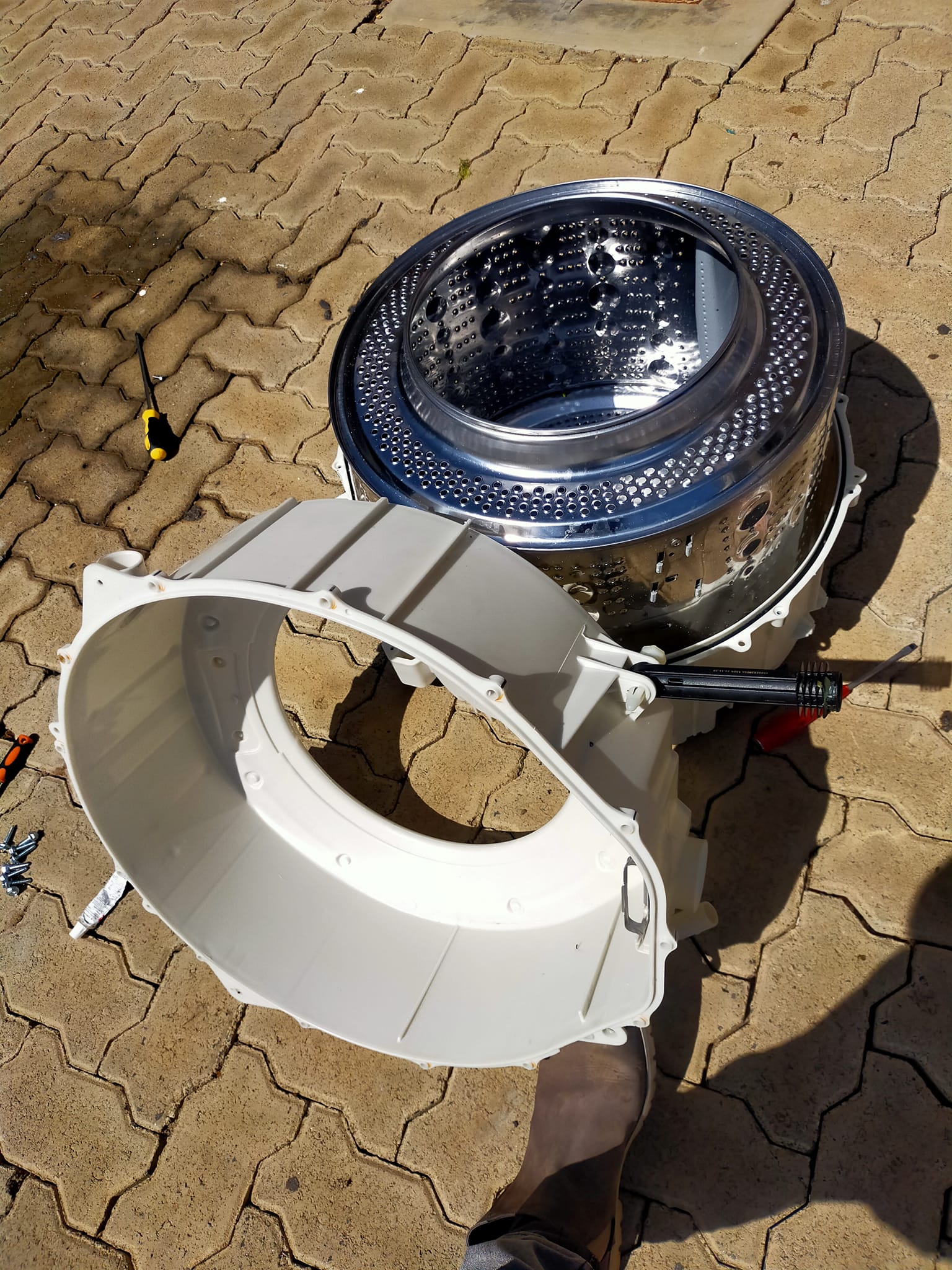
Unplug the washing machine first. If it is a front loader, look for a small access panel near the bottom front. Behind it is usually the drain filter or filter trap. Place towels and a shallow tray underneath before opening it slowly because water will come out.
This filter catches many of the things people forget in pockets: coins, hair clips, buttons, nails, bottle tops, lint, and small fabric pieces. Bra wires are especially troublesome because they can slip through the drum holes and jam the pump impeller.
If you remove a coin, wire, or tangled lint from the filter, clean it properly, close it back, and run a drain cycle. Many washers start draining again immediately after this simple clean-out.
Top loaders also have filters, though they may be inside the drum, near the side, or under a small cover depending on the model. If you are not sure where yours is, check the manual or search using the model number.
In areas with borehole water or sandy supply, such as Kitengela, Ruaka, and parts of Kiambu, grit can build up quickly. Cleaning the filter regularly can prevent many drainage problems.
Check the Drain Hose and Its Position
If the filter is clean but the washer still will not drain properly, check the drain hose.
The hose should rise from the machine and then empty into a standpipe, sink, or drain at the correct height. If it lies flat on the floor or sits too low, water may siphon out at the wrong time or fail to drain properly.
This happens often in rentals where plumbing has been improvised. The machine may be fine, but the hose setup is wrong.
Lift the drain hose and secure it properly. It should usually sit high enough to prevent siphoning, but not so high that the pump struggles. If the hose was too low and the problem stops after adjusting it, you may not need a repair at all.
Also check for kinks. If the machine has been pushed too hard against the wall, the drain hose may be squeezed shut. Straighten it and try again.
A clogged hose can also stop drainage. Detach it carefully and flush water through it if possible. If water does not pass freely, there may be lint, sludge, fabric pieces, or debris inside.
If the washer drains into a sink, make sure the sink itself is not blocked. Sometimes the machine pumps correctly, but the plumbing cannot handle the water, so it backs up and looks like a washer fault.
Listen to the Pump
The drain pump can tell you a lot if you listen carefully.
Plug the machine back in, select drain or spin, and listen near the lower front or back of the washer.
If you hear a low hum but the water does not move, the pump may be getting power but unable to turn. It could be jammed by a small object, damaged by grit, or burnt out. Switch it off quickly because a stalled pump can overheat.
If there is no sound at all, the pump may not be receiving power. That could point to a control board issue, wiring fault, pressure switch problem, or failed pump.
If you hear grinding, rattling, or rough movement, something may be stuck inside the pump housing. Sand, coins, and small metal objects can damage the impeller until it no longer moves water properly.
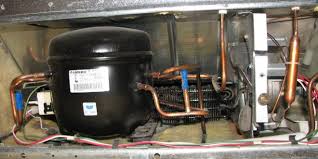
Drain pumps are common replacement parts for many popular washing machine brands in Kenya, including LG, Samsung, Ramtons, Von, Mika, and Bruhm. The cost depends on the brand, model, part quality, and labour. A technician should test the pump before replacing it.
The Pressure Switch Can Confuse the Machine
Washing machines do not visually “see” water in the drum. They rely on sensors.
One important part is the pressure switch or water level sensor. It connects to a small tube that helps the machine know whether the drum is full or empty. If that tube gets blocked with detergent sludge, lint, or hard-water residue, the machine may think water is still inside even when it has drained.
When that happens, the washer may refuse to continue to spin or complete the cycle.
This kind of fault is harder to confirm without testing, but there are clues. If the machine drains when you manually select drain, but refuses to move properly through a normal cycle, the pressure system may be involved.
A technician can clear the tube, test the switch, or replace the part if needed.
Hard water and too much detergent make this problem more likely. Powder residue and mineral buildup can form thick sludge inside hidden parts of the machine.
Error Codes Can Save Time
If your washing machine has a digital display, do not ignore the error code.
Many brands use codes to point toward the problem. LG and Samsung often show drain-related errors such as OE or 5E. Bosch may show E18 or F18. Whirlpool models may show F05 or F21. The exact code depends on the brand, but most drain errors mean the machine tried to remove water and failed within the expected time.
Take a photo of the error code before switching the washer off. When calling a technician, share the code, brand, and model. This helps them prepare and may save you from a second visit.
If your machine has no display, it may flash lights in a pattern. Count the flashes if you can. That pattern can also help with diagnosis.
When the Problem Is Bigger Than a Blockage
Most drainage problems are caused by filters, hoses, pumps, or sensors. But sometimes the issue is more serious.
If the filter is clean, the hose is clear, and the pump is working, the control board may not be sending power to the pump. This can happen after power surges or voltage changes, which are common in many parts of Kenya.
A board fault should be diagnosed carefully. Replacing the board without testing the pump, wiring, and pressure system first can become an expensive mistake.
Wiring damage is another possibility. In some homes, especially where appliances sit in utility corners or stores, rats can chew wiring. A technician will need to test continuity and inspect the wiring harness.
If your machine has had repeated drain problems even after pump replacement, the technician should look deeper. There may be a cracked pump housing, partial blockage inside the tub, damaged pressure system, or poor drain setup.
A proper repair should solve the cause, not just replace the same part again.
What a Professional Drain Repair Should Look Like
A good washing machine technician will not begin by guessing.
They should ask what happened, whether there is an error code, whether the machine hums, whether water remains in the drum, and whether the fault started suddenly or gradually.
During the visit, they should check the filter first. Then they should inspect the drain hose, pump, pressure system, wiring, and control board if needed. If the pump is jammed, they should show you what caused the blockage. If the pump is dead, they should test it before replacement.
After repair, they should run a rinse, drain, and spin cycle to confirm the machine is working properly. Do not let the technician leave before the washer drains correctly.
Ask for a clear quote before work begins. Also ask about warranty on parts and labour. Even a simple WhatsApp note or M-Pesa message showing what was repaired and the warranty period is useful if the issue returns.
The Real Plug can help you find vetted washing machine repair technicians by location and service type. For drainage issues, look for professionals who mention drain pump repair, blocked filter cleaning, LG or Samsung drain errors, pressure switch diagnosis, and general washer repair.
How to Prevent Future Drainage Problems
Most washing machine drainage problems start with what enters the machine.
Check pockets before every wash. Coins, hair clips, screws, and small objects can block the filter or destroy the pump. Use laundry bags for items with wires, hooks, or delicate parts. Bra wires are a common cause of drain pump damage.
Clean the filter regularly. For a busy household, once a month is a good habit. If you have children or wash heavily soiled clothes often, clean it more frequently.
Use the right amount of detergent. Too much soap does not clean better. It creates foam, residue, and sludge that can clog filters, hoses, and pressure tubes. In hard-water areas, use the recommended detergent carefully and consider a water softener if needed.
Run a cleaning cycle regularly. An empty hot wash with a washing machine cleaner can help remove soap scum and buildup. Leave the door open after washing so the drum can dry and mold does not grow inside.
Avoid washing rugs with rubber backing. As the rubber breaks down, small pieces can enter the drain system and block the pump.
These habits are simple, but they prevent many expensive repairs.
When Repair May Not Be Worth It
If your washing machine is fairly new and the problem is a blocked filter, pump, hose, or pressure switch, repair usually makes sense.
But if the machine is old, rusty, noisy, leaking, and has already had repeated pump or drainage problems, it may be time to compare repair cost against replacement.
A practical guide is the 50% rule. If the repair costs more than half the price of a similar new machine, and the washer is already old, replacing it may be the better option.
A trustworthy technician should tell you this honestly. Sometimes the best repair advice is not to repair.
Water Should Leave the Machine, Not Stay There
A washing machine that will not drain can make laundry day messy very quickly. But in many cases, the fix is simple if you act early.
Start with the filter. Check the drain hose. Listen to the pump. Look for error codes. Avoid forcing the machine to run if it is humming but not draining.
If the problem continues, call a technician who tests before replacing parts and explains the cause clearly. Once it is fixed, build habits that keep the drain system clean: empty pockets, clean filters, use the right detergent, and protect the machine from power surges.
That way, when the cycle ends, the drum is empty, the clothes are ready for drying, and you are not stuck bailing water out with a cup.