

Walk into an appliance shop in Nairobi, Mombasa, Kisumu, or Nakuru, and the salesperson will probably ask the same question: front load or top load? They may talk about water saving, spin speed, washing performance, and design. All useful points. But one thing rarely comes up during the sale is repair.
How does each machine fail? Which one costs more to fix in Kenya? Which one handles hard water better? Which one is more forgiving when power flickers or the machine is overloaded with blankets?
Those questions matter because Kenyan homes do not always use washing machines gently. A washer may handle school uniforms, work clothes, bedding, towels, and heavy weekend laundry for a full household. It may deal with borehole water, unstable power, dusty laundry areas, and detergent that is not always ideal for the machine type.
So before choosing between a front load and top load washing machine, or deciding whether to repair the one you already have, it helps to understand how each type behaves when things go wrong.
How Front Load and Top Load Washers Work
Top load washing machines are the more familiar option in many Kenyan homes. You load clothes from the top, and the machine uses an agitator or impeller to move clothes through water. Many models are mechanically simpler, easier to access, and generally cheaper to buy.
Front load washing machines work differently. You load clothes from the front, and the drum rotates sideways, lifting and dropping clothes through a smaller amount of water. They use less water, spin faster, and are usually gentler on clothes.
That difference in design affects repairs.
Top loaders tend to have more mechanical faults: belts, gearboxes, lid switches, pumps, and tub seals. Front loaders tend to have more issues with door seals, door locks, bearings, suspension, control boards, and sensors.
Neither type is perfect. They simply fail differently.
Common Top Load Washing Machine Problems in Kenya
Top loaders are popular because they are usually cheaper to buy and simpler to repair. Many technicians across Nairobi, Eldoret, Nakuru, Kisumu, and Mombasa are familiar with them, and parts for common brands are easier to source.
One common top loader fault is a drain pump problem. If sand, lint, coins, or small objects get into the pump, the machine may hum but fail to drain. This is especially common in areas using borehole water or where clothes carry dust and grit.
Belt problems are also common. If the motor runs but the drum does not move, the belt may be loose, worn, or snapped. Belt replacement is usually one of the simpler washing machine repairs.
Older top loaders may also develop gearbox problems. You may hear grinding during the wash cycle, or the agitator may stop moving even though the motor is running. Gearbox repairs cost more than belt or pump repairs, but they may still be worth it if the machine is otherwise in good condition.
Tub seals and bearings can also wear out. This may cause leaking from underneath, noisy spinning, or rusty water marks. Hard water can speed up seal wear, especially if the machine is not cleaned regularly.
The advantage of top loaders is that they are usually more forgiving. They can handle rougher use better than front loaders, and many models are less sensitive to electronic board failure. That makes them practical for busy households, rentals, and homes where the machine is moved often.
Common Front Load Washing Machine Problems in Kenya
Front loaders are efficient, but they need more careful use.
The door seal is one of the first parts to watch. It is a large rubber gasket that keeps water inside the drum. If it tears, hardens, or develops mold, water can leak onto the floor. In humid coastal areas like Mombasa, Diani, and Malindi, rubber parts may wear faster. In Nairobi homes, mold can build up if the door is always closed after washing.
Door locks are another common issue. A front loader will not start unless the door lock engages properly. If the lock fails, the machine may power on but refuse to begin the cycle.
Bearings are a bigger concern. Front loaders spin at high speeds, so the drum needs strong support. Overloading the machine with heavy duvets, blankets, or towels can wear out bearings and shock absorbers. A worn bearing often sounds like a plane taking off during spin.
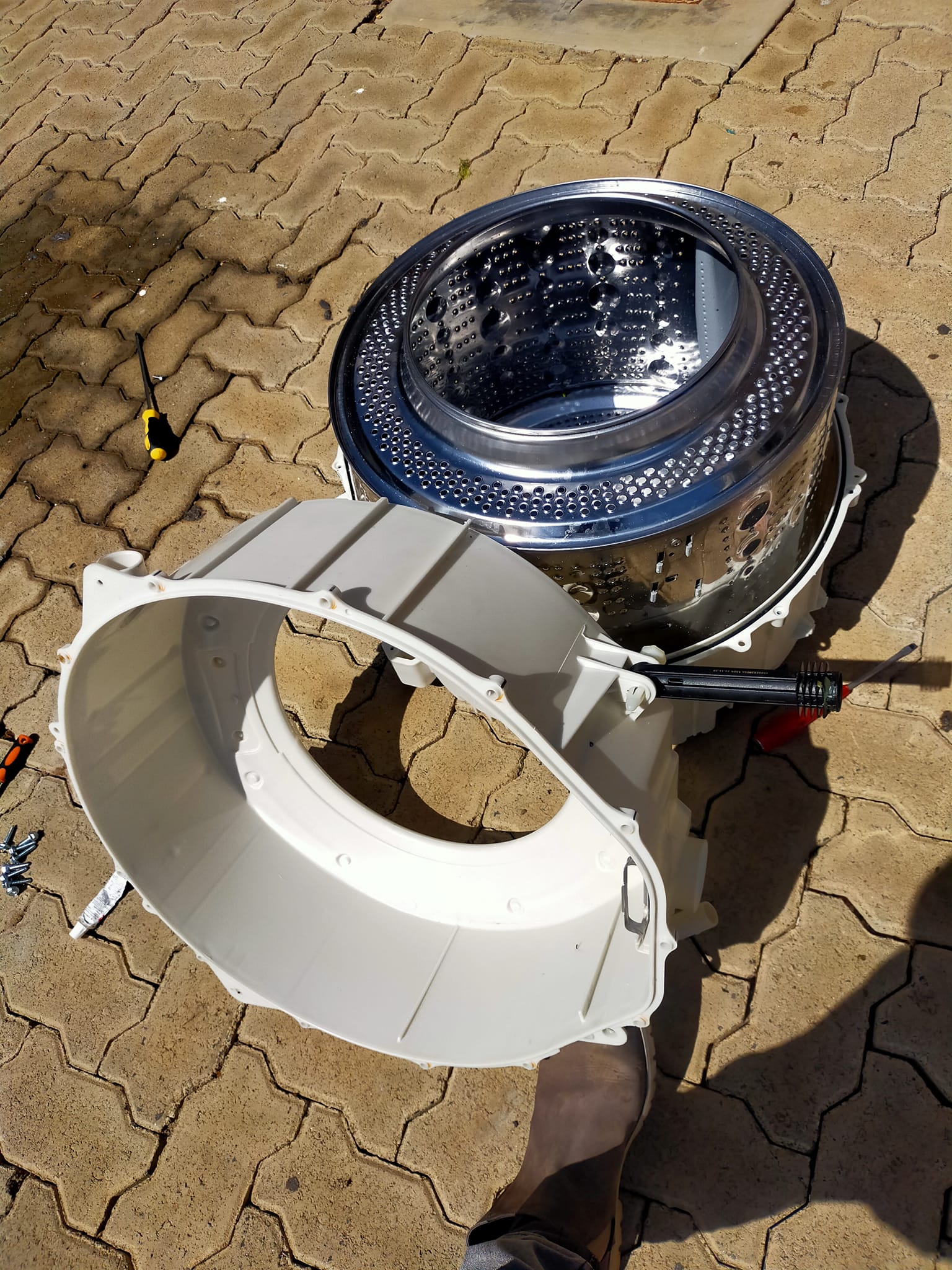
Bearing replacement on a front loader can be costly because the machine may need to be stripped down. On some models, the drum is sealed, which makes bearing replacement difficult or uneconomical.
Control board problems are also more common in front loaders because they rely heavily on electronics. Power surges and voltage fluctuations can damage boards, sensors, and motor control systems. In areas where lights flicker often, a stabilizer or voltage protector is important.
Front loaders reward good care. But they punish neglect faster than top loaders.
Water Quality Affects Both, but Not Equally
Water quality is a major issue in many Kenyan homes.
Hard water and borehole water can leave mineral deposits inside washing machines. These deposits can clog inlet valves, coat heating elements, block pressure tubes, and leave residue inside the drum.
Front loaders use less water, which is good for saving water, but it also means detergent and minerals are more concentrated. If you use too much detergent or the wrong type, buildup can happen quickly. This can lead to bad smells, drainage errors, pressure switch issues, and poor washing performance.
Top loaders use more water, so residue may be diluted more. They still suffer from hard water, but often more slowly.
If you live in an area with hard water, regular cleaning cycles matter. Use the correct detergent, avoid overusing soap, and clean filters often. Front loaders especially need monthly service washes to prevent buildup.
Power Problems Hit Front Loaders Harder
Power fluctuation is one of the realities of appliance ownership in Kenya.
Top loaders, especially simpler models, often have fewer sensitive electronics. Some have mechanical timers and basic controls, so they may survive power issues better.
Front loaders depend more on control boards, sensors, digital displays, motor control modules, and door locks. A power surge can leave the machine dead, stuck mid-cycle, or displaying error codes.
This does not mean front loaders are a bad choice. It just means they need protection. If you own a front loader, a good stabilizer or voltage protector should be part of the setup.
Even top loaders can suffer from power issues, especially modern models with digital controls. But overall, front loaders tend to be more vulnerable because of their electronic systems.
Detergent Choice Matters More With Front Loaders
One mistake many people make is using the same detergent for every washing machine.
Front loaders need low-suds detergent, often called high-efficiency detergent. If you use too much regular powder, the machine can foam excessively. Too much foam affects drainage, confuses sensors, and leaves residue inside the drum and pressure system.
Top loaders are more tolerant of regular detergent because they use more water. Even then, using too much soap can still cause buildup and smells.
With any washing machine, more detergent does not mean cleaner clothes. It often means more residue.
For front loaders, use the right detergent and the correct amount. This one habit can prevent many drainage, odor, and sensor problems.
Repair Costs: Front Load vs Top Load
Repair costs vary by brand, model, location, and part availability. But generally, front loaders cost more to repair than top loaders.
Top loader repairs are often simpler and faster. Belt replacement, lid switch repair, drain pump replacement, and basic gearbox repairs are familiar jobs for many technicians.
Front loader repairs can take longer because the machine is more compact and complex. Door seal replacement, bearing work, control board repair, and suspension repairs often require more labour.
Parts also differ. A front loader door seal, control board, or drum bearing job may cost more than a top loader belt or lid switch. Premium brands such as Bosch, Ariston, Siemens, and some Samsung or LG models may cost more if parts are less available.
That said, a well-maintained front loader can save money through lower water use and better spin performance. So the choice is not just about repair cost. It is also about usage, water availability, drying space, and how carefully the machine is maintained.
Which One Lasts Longer in Kenyan Homes?
Both front load and top load washing machines can last many years with proper care.
Top loaders often handle rough use better. They are more forgiving with heavy loads, power issues, and ordinary detergent. This makes them a good fit for busy households, rental homes, and users who want a machine that is easier and cheaper to maintain.
Front loaders can also last well, but they need better habits. You need to avoid overloading, use the right detergent, leave the door open after washing, run cleaning cycles, protect the power supply, and deal with small leaks early.
In homes with treated water, stable power, and careful users, front loaders perform very well. In homes with heavy laundry loads, hard water, frequent blackouts, and less controlled use, top loaders may be less stressful.
The better machine is the one that matches your home.
Repair or Replace? How to Decide
Sometimes repair makes sense. Sometimes replacement is the wiser choice.
If a top loader needs a belt, pump, lid switch, or minor seal repair, it is usually worth fixing. If it needs a major gearbox, bearing, tub, and motor repair all at once, compare the cost with buying a new machine.
For front loaders, small repairs like door locks, pumps, and seals may be worth it. But if the machine needs bearings, a control board, and suspension work, the repair cost can rise quickly.
Use the 50% rule. If the repair costs more than half the price of a similar new washing machine, and the unit is already old, replacement may make more financial sense.
A trustworthy technician should help you compare the repair cost, age of the machine, condition, and likely future problems before you decide.
Choosing the Right Technician Matters
Not every technician repairs both front loaders and top loaders equally well.
Some are excellent with top loader gearboxes, belts, pumps, and lid switches. Others specialize in front loader door locks, bearings, boards, sensors, and direct-drive systems.
When booking a technician, mention your machine type, brand, model, and fault. A technician who understands front loaders will ask different questions from one handling a basic top loader.
The Real Plug can help you find vetted washing machine repair professionals by location, appliance type, and service experience. Reviews are helpful because they show whether a technician has handled similar machines and whether the repair lasted.
If someone has good reviews for LG front loader bearing repair in Westlands, they may be a better choice for that job than a general repairer. If another technician is praised for quick Ramtons top loader pump repairs in Donholm, they may be the right fit for a simpler top loader fault.
How to Maintain Each Type
Top loaders need regular filter cleaning, proper loading, and basic checks on hoses, belts, and drainage. Avoid overloading them with heavy blankets and check pockets before washing.
Front loaders need all that plus more attention to the door seal, detergent choice, and cleaning cycles. Leave the door open after washing. Wipe the rubber gasket. Use low-suds detergent. Run a service wash regularly. Protect the machine from power surges.
For both types, keep the washer level. A machine that rocks during spin will wear out shocks, bearings, and suspension faster. Also avoid pushing the washer too tightly against the wall, where hoses may kink.
The Right Washer Is the One That Fits Your Home
There is no single winner between front load and top load washing machines.
If you want lower water use, faster spin, better drying, and gentler washing, a front loader can be a good investment. But it needs stable power, correct detergent, and careful use.
If you want a machine that is easier to maintain, cheaper to repair, and more forgiving with heavy family laundry, a top loader may suit you better.
Kenyan homes are different. A household in Runda with treated water and stable power may enjoy a front loader for years. A busy family in Githurai dealing with hard water, heavy loads, and power flickers may be happier with a top loader.
Know how each type fails. Match the machine to your habits, water, power, and budget. And when it breaks, call someone who understands the difference.
That way, laundry day stays manageable, and your washing machine keeps doing the job without unnecessary drama.